New to the game? Start with the beginner guide. This page pairs with the battleship guide and the destroyer guide. All guides: World of Warships hub.
The citadel: where ships really die
Inside most cruisers and battleships sits the citadel, the armored box around the engines and magazines, usually at or below the waterline in the middle of the hull. An AP shell that penetrates the citadel and explodes inside deals its full damage. Hits elsewhere on the hull deal only a fraction. That is why a broadside cruiser can lose most of its health to one battleship salvo while an angled battleship shrugs off the same shells.
Repair Party restores only a small part of citadel damage, according to the official wiki, while normal damage heals back much better. So citadel hits are close to permanent. Denying them is the core of survival, and that means angling.
Ricochets and angling
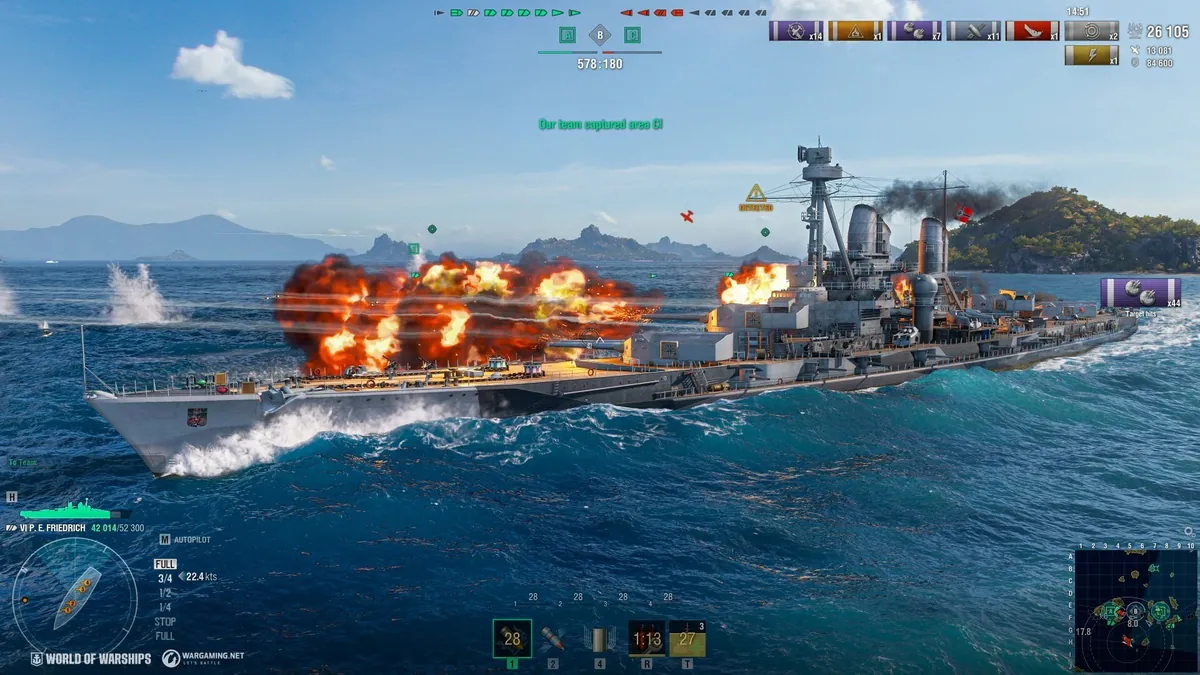
When an AP shell hits armor at a shallow angle, it may bounce off. Angles are measured from the line straight out of the armor plate. For most guns in the game, the official wiki and independent guides give the same numbers: a shell may ricochet from 45 degrees and always ricochets from 60 degrees. Some ships have better ricochet angles on their shells, such as many US heavy cruisers and the new Pan-American destroyers, which makes their AP harder to bounce.
In practice, this is why you angle your ship. If you point your bow or stern toward the enemy at a moderate angle, his shells hit your side armor at a steep angle and bounce, or fail to penetrate. Turn too far and you show your side again; turn too little and the bow armor itself takes hits. The sweet spot is an angle where you can still fire most of your guns while the side armor sits well over the bounce angle for incoming fire.
Overmatch: when angling does not help
There is one big exception to ricochets. If the shell's caliber is more than 14.3 times the thickness of the plate it hits, it overmatches: it cannot bounce and goes through, whatever the angle. The official wiki and the official World of Warships armor video explain the same rule. It decides who can bow tank whom:
| Plate thickness | Overmatched by guns of | Where you find it |
|---|---|---|
| 19 mm | 272 mm and more | Typical destroyer hull |
| 25 mm | 358 mm and more | Bow and stern of many high tier cruisers |
| 27 mm | 387 mm and more | Plating on some high tier cruisers |
| 32 mm | 458 mm and more | Bow and stern of high tier battleships |
This is why Yamato with 460 mm guns is feared at tier X: it overmatches even 32 mm battleship bows. And it is why a cruiser should never bow tank a battleship: 406 mm guns overmatch 25 mm cruiser plating, so the bow only helps against other cruisers. Cruisers survive battleships with distance, islands and constant turning, not with angles.
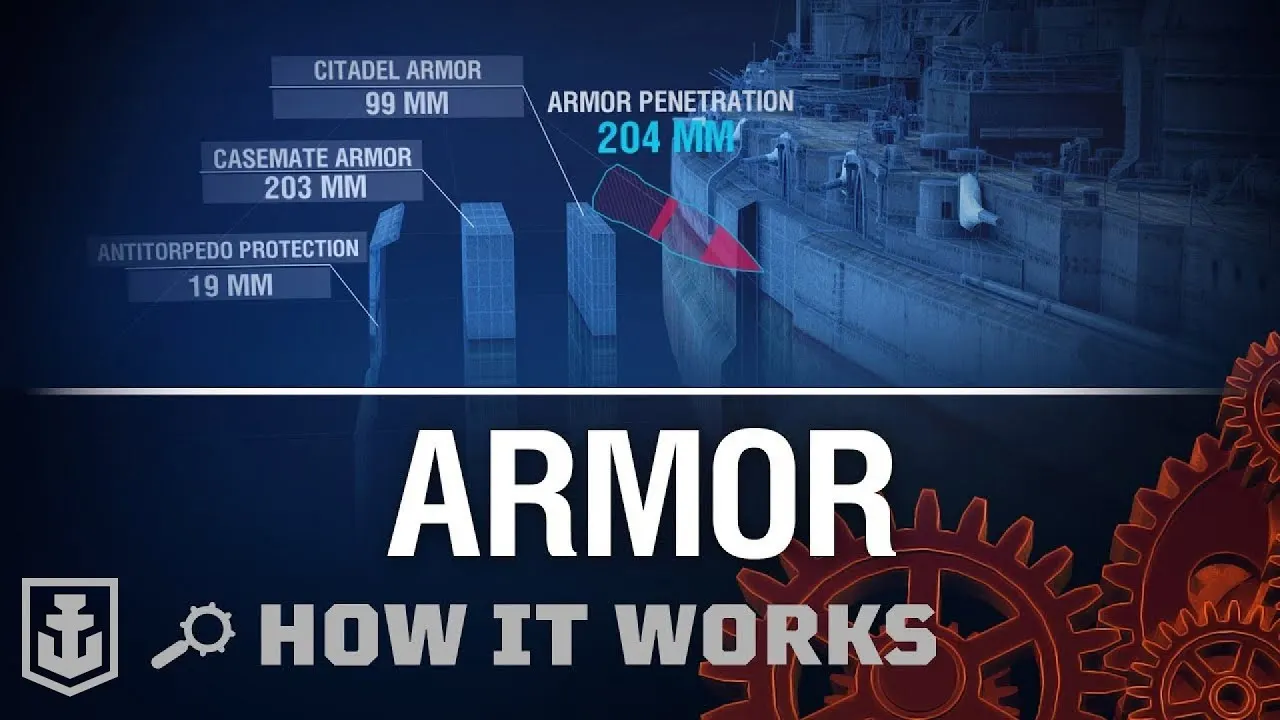 How it Works: Armor (official World of Warships channel)
Overpenetration and why AP fails on destroyers
An AP shell needs to hit enough armor to arm its fuse. Against thin plates, a large AP shell passes straight through and leaves the ship before it explodes: an overpenetration, which deals only a small fraction of the shell's damage. That is what happens when a battleship fires AP into a destroyer or the thin ends of a cruiser. Big AP shells also do reduced damage to destroyers by design. Against destroyers, load HE.
The same logic explains a common battleship frustration: an AP shell that hits a cruiser's superstructure or bow often overpenetrates for little damage. Aim at the waterline in the middle of the hull, where the shell meets enough armor to arm and then reaches the citadel.
AP vs HE vs SAP: which shell to load
| Shell | How it works | Load it against |
|---|---|---|
| AP (armor piercing) | Penetrates, then explodes inside after a short fuse. Can ricochet, overpenetrate or shatter. | Broadside cruisers and battleships, any target where you can reach the citadel |
| HE (high explosive) | Explodes on impact, cannot ricochet. Damages only if it penetrates the plate it hits, can start fires. | Destroyers, angled targets, superstructures, battleships you cannot citadel |
| SAP (semi armor piercing) | Penetrates more than HE, explodes almost at once, wide ricochet angles. No fires, no overpenetration. | Destroyers, cruisers and the thin parts of battleships, mainly on Italian ships |
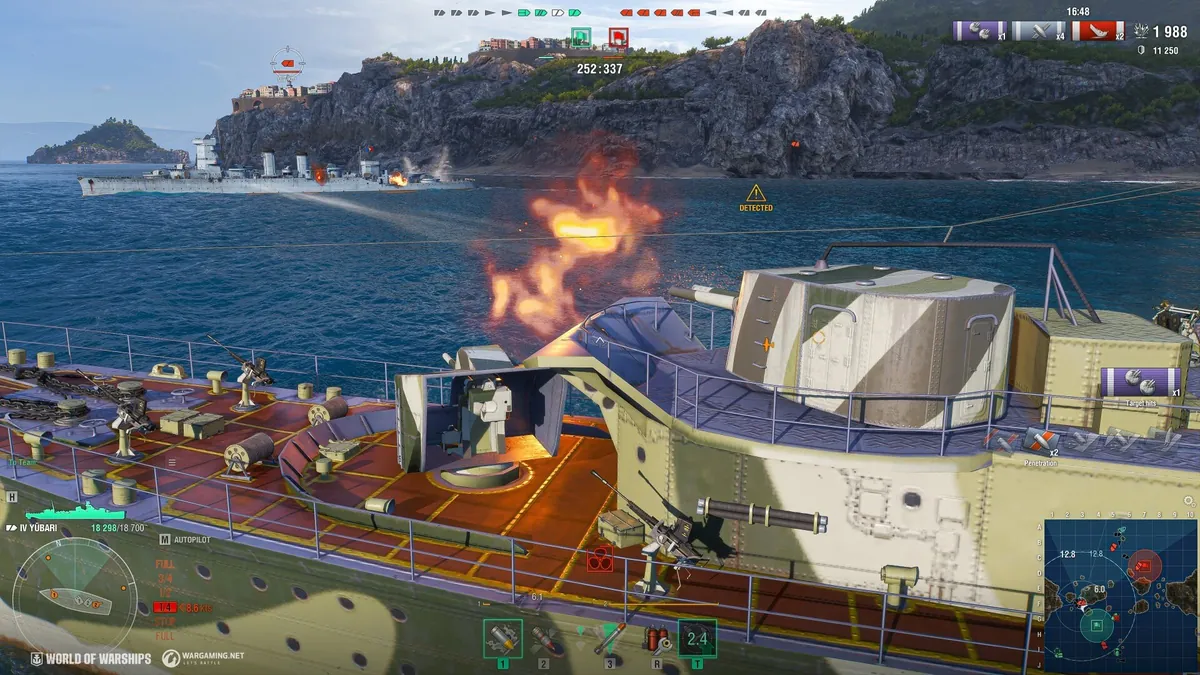
HE penetrates a plate only if its penetration value is higher than the thickness. For most guns the official wiki gives HE penetration as one sixth of the caliber, with exceptions such as many British battleships that get a quarter. The commander skill Inertia Fuse for HE Shells raises HE penetration at the cost of fire chance, which matters for cruisers whose HE cannot get through 27 or 32 mm plates otherwise.
SAP sits between the two. It does not overpenetrate and keeps penetrating at angles where AP would bounce, but it cannot start fires. Italian cruisers like Venezia are the main SAP users. If your ship has SAP, it is usually the right shell against cruisers that angle well.
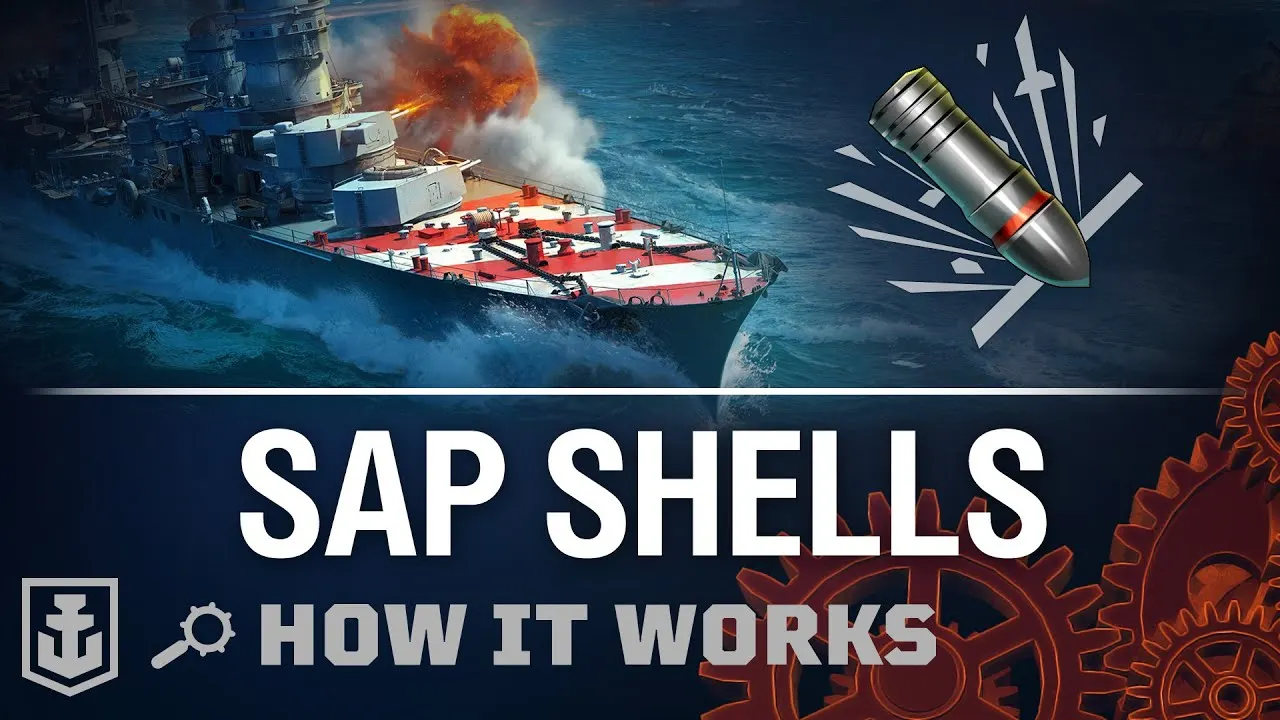 How it Works: SAP Shells (official World of Warships channel)
Fires and flooding
HE does damage twice: on impact and through fires. A burning section ticks damage until the fire goes out, and battleships have several fire zones that can burn at once. Flooding comes from torpedoes and drains hit points quickly. Both are cleared by the Damage Control Party, and fire and flooding damage can be healed back completely with a Repair Party, according to the official wiki. That is why cruisers that spam HE wear battleships down over a whole battle rather than in one salvo.
Reading the hit ribbons
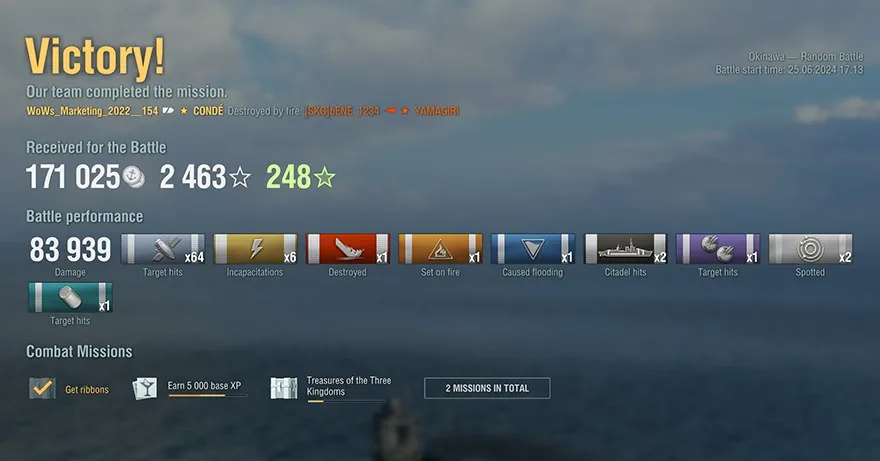
After every salvo, the ribbons at the bottom of the screen tell you what your shells did. Learn them and you can fix your aim and shell choice in the middle of a battle:
| Ribbon | What happened | What to change |
|---|---|---|
| Citadel hit | AP reached the citadel | Nothing: keep aiming there |
| Penetration | The shell penetrated and exploded inside the hull | Aim a bit lower for citadels on broadside targets |
| Overpenetration | AP passed straight through | Switch to HE, or aim lower at the waterline |
| Ricochet | AP bounced off an angled plate | Wait for a better angle or switch to HE |
| Shatter | The shell failed to penetrate | Use AP or a bigger gun, or aim at thinner parts |
Bow tanking as a battleship
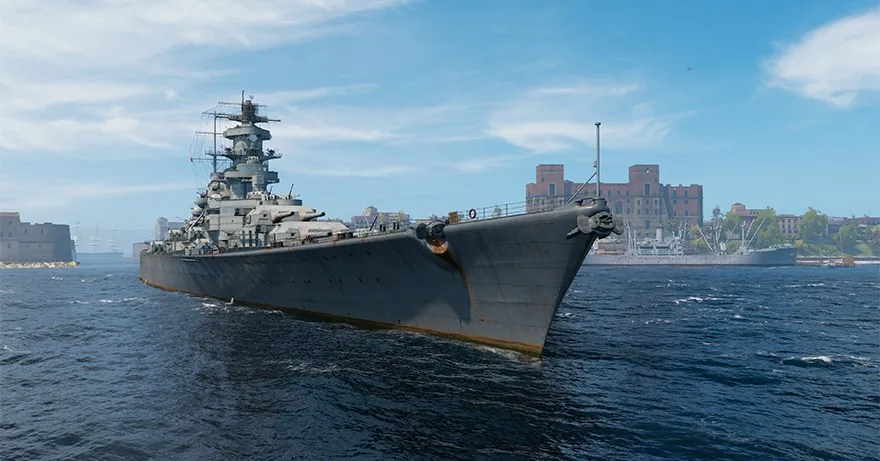
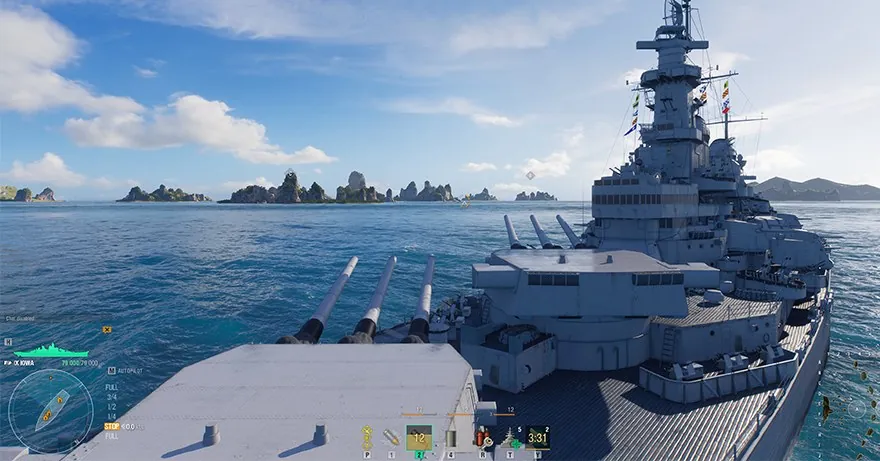
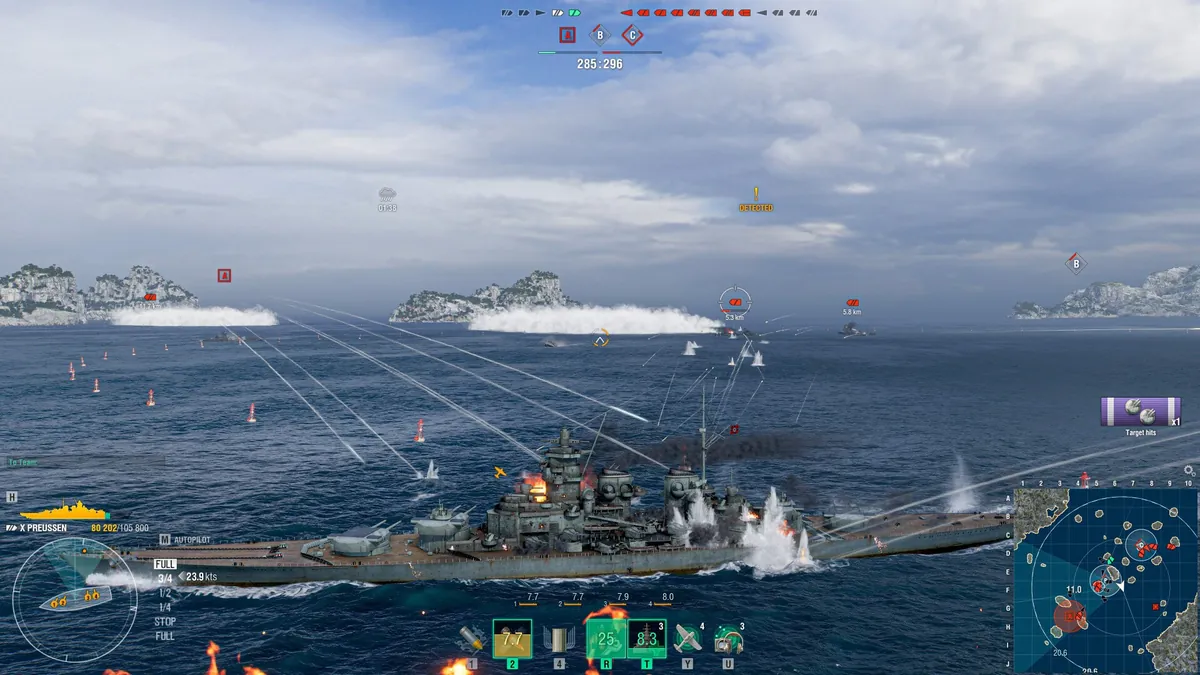
Battleships can do what cruisers cannot: point the bow at the enemy and take hits on armor that most guns cannot overmatch. High tier battleships have 32 mm bows, which only guns of 458 mm and more overmatch. So a battleship bow in against cruisers and most battleships takes bounces and shatters instead of citadels. The cost is firepower: with the bow pointing straight at the enemy, the rear turrets often cannot fire. Most good players sit at a slight angle, enough to keep the rear turrets in action and the armor safe.
Bow tanking also has a weak spot: torpedoes. A battleship that sits bow in for too long becomes a stationary target. Reverse and shift position between enemy salvos so you are never in the same place for long.
A practical angling checklist
- Know who can overmatch you. Cruiser against battleship: angling does not save you, cover does. Battleship against cruisers: bow in and you are almost immune to their AP.
- Point your bow at the largest threat, at an angle that keeps most of your guns firing.
- Never turn broadside to fire a full salvo when an enemy battleship has you in sight and is loaded.
- Load AP for broadsides, HE for angles and destroyers, SAP if your ship has it.
- Aim at the waterline amidships on broadside targets, at the superstructure with HE on angled ones.
FAQ
What is overmatch in World of Warships?
An AP shell overmatches armor when its caliber is more than 14.3 times the plate thickness. It then penetrates regardless of angle and cannot ricochet.
At what angle do shells ricochet in World of Warships?
For most guns, AP may ricochet from 45 degrees and always ricochets from 60 degrees, measured from the line perpendicular to the plate.
Should I use AP or HE in World of Warships?
AP against broadside cruisers and battleships, HE against destroyers, angled targets and armor your AP cannot penetrate.
What is SAP in World of Warships?
Semi armor piercing shells, used mainly by Italian ships. They penetrate more than HE, do not overpenetrate and have wide ricochet angles, but cannot start fires.
Why do my AP shells do no damage to destroyers?
Destroyer plating is too thin to arm big AP fuses, so the shell overpenetrates. Use HE against destroyers.