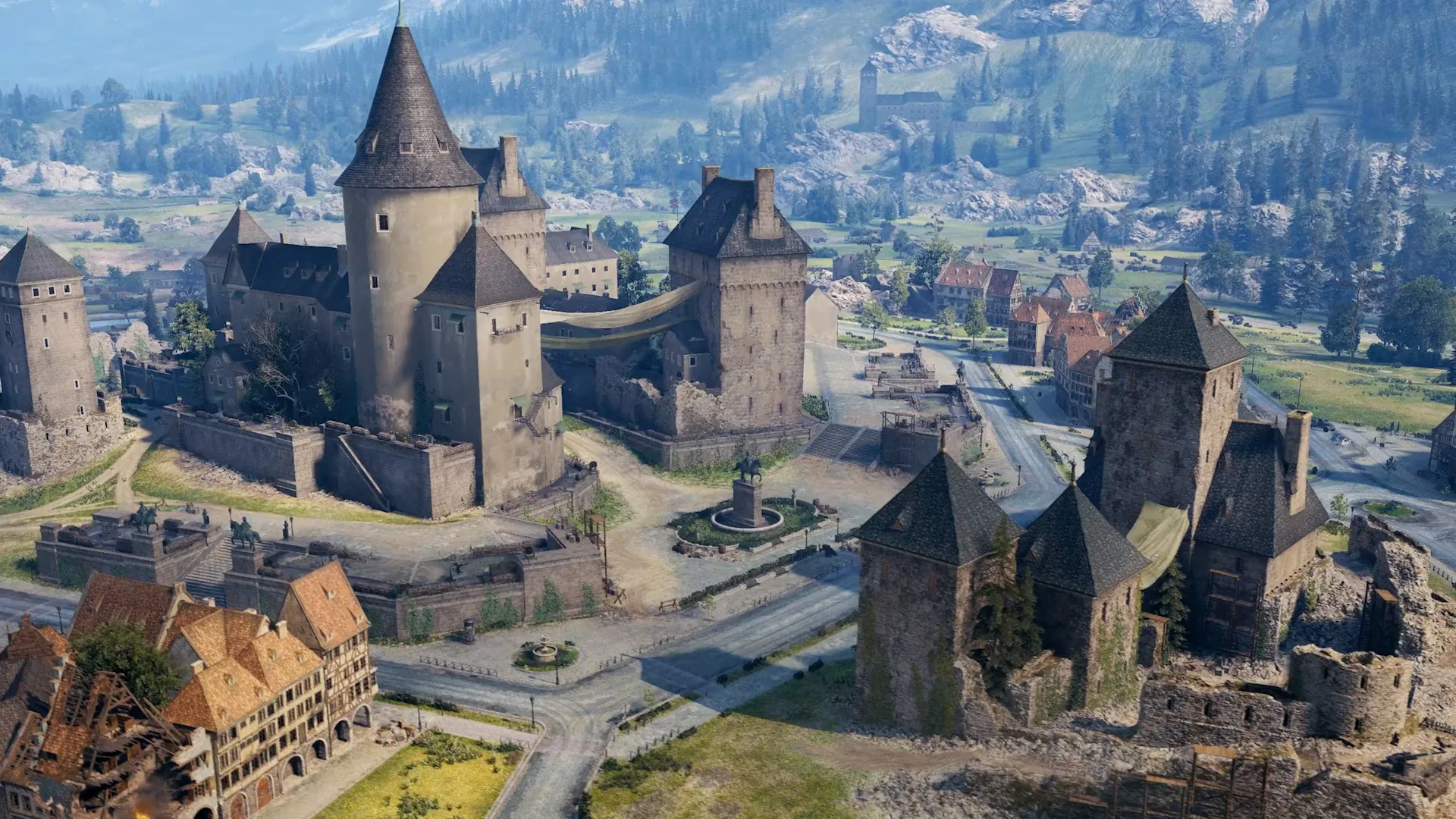
This page is about positioning: reading the map, picking a flank and holding it. If you are still learning what each class does, read tank classes explained first. The rest of the series is on the World of Tanks hub.
How to read a World of Tanks map
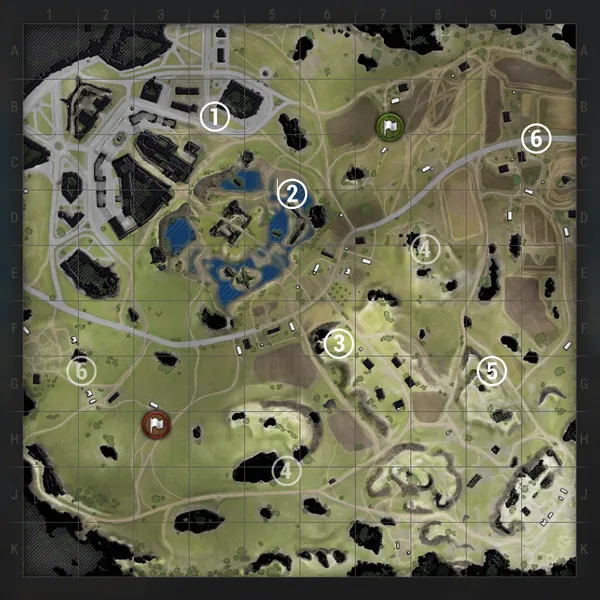
Every map is cut into a 10 by 10 grid. Rows are lettered A to K (there is no I, so it never gets confused with the number 1) and columns are numbered 1 to 0. When a teammate types "E5" or pings a square, that is where they mean. On a standard 1,000 by 1,000 metre map each square is 100 metres across, which is a handy ruler: your spotting range can never be more than 445 metres, so roughly four and a half squares is the furthest your own tank will ever light anything.
The game also draws everything within 565 metres of you. Enemies further away than that are shown only as icons on the minimap, even when a teammate spots them. That is why you sometimes see a red marker on the minimap and nothing on screen.
Before the battle starts, look at four things on the loading screen and minimap:
- Where the bases are. Green flag is yours, red is theirs. In Encounter there is one neutral base in the middle.
- The corridors. City streets, a ravine, a ridge line. These are where heavies fight.
- The open ground. Fields and plains where light tanks spot and tank destroyers shoot from range.
- The high ground. Ridges and hills that mediums and TDs use to shoot down into the enemy.
City, open and mixed maps
Wargaming describes maps by climate (summer, winter, desert) but for positioning the useful split is how much cover they have.
| Map type | Examples in the 2026 rotation | Who has the easiest time | Main risk |
|---|---|---|---|
| City | Himmelsdorf, Ruinberg | Heavy tanks and assault TDs with good frontal armor | Getting flanked through a side street while you trade at a corner |
| Open | Prokhorovka, Malinovka | Light tanks, snipers, mediums with good view range | Being spotted the moment you leave cover |
| Mixed | Nebelburg, Siegfried Line, Fisherman's Bay, Overlord | Mediums that can switch flanks | Splitting the team three ways with nobody winning anywhere |
Wargaming itself calls Malinovka and Prokhorovka "typical open maps where LT performance influences the battle outcome greatly" in its Update 2.4 matchmaker notes. That is a good summary of open maps: whichever team spots first usually wins the opening trade.
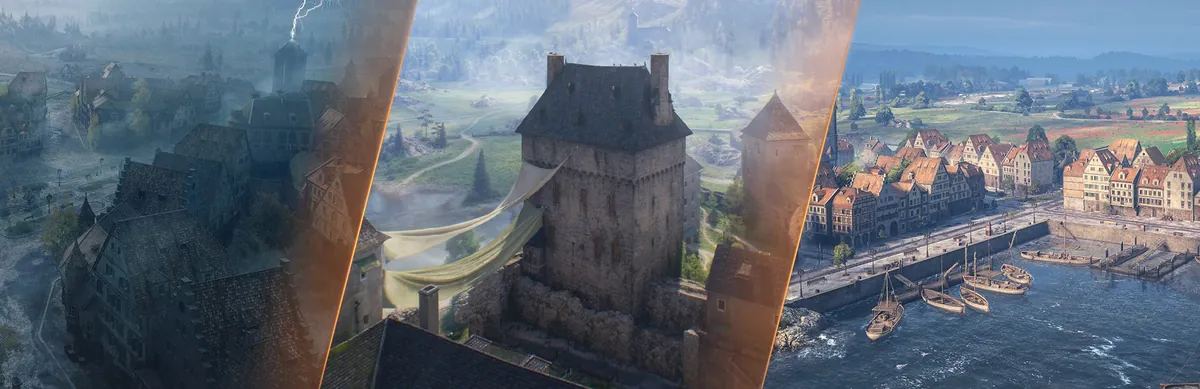
Where each class goes
There is no position that is right in every battle, but there are roles. These are the ones that hold on almost every map in the current rotation.
- Heavy tanks go where the armor works: city blocks, a castle courtyard, a ravine with hard cover. Their job is to hold the corridor and win the trade. A heavy that drives into open ground to snipe is wasting its hit points. Learn which parts of your tank bounce shells in our armor and penetration guide.
- Medium tanks take the ground next to the heavies: a ridge, a hill line, a village that gives fire support into two flanks. They should be able to move when the battle shifts.
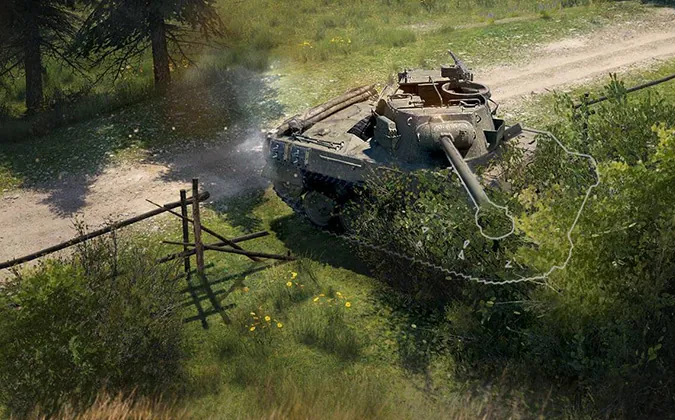
- Light tanks spot. Since Update 2.4 they have roles: Scouts spot from bushes, Versatile lights can fight a bit, Support lights help their flank. The matchmaker allows no more than two light tanks per team from tier VII up and tries to give both teams the same light tank roles.
- Tank destroyers sit in the second line where they can shoot into a lane their team is fighting for. Snipers want long sightlines from bushes; assault TDs act like slower heavies.
- Artillery stays back and supports whichever flank needs it. Since Update 2.3 there are at most two SPGs per team.
Nebelburg after Update 2.4.1: a worked example
Nebelburg came from Grand Battles into Random Battles with Update 2.4.1 in October 2026, cut from 1,400 by 1,400 metres to 1,000 by 1,000. It is a good map to learn on because Wargaming published exactly what each area is for. The numbers below match the minimap at the top of this page.
| Zone | Where | Who should go | What it does |
|---|---|---|---|
| 1. Castle | North west, around B4 | Heavy tanks first, then anything | Reworked key point with new cover and terrain folds for different engagement ranges |
| 2. Island | Lakes around D5 | Light and medium tanks | Early spotting and support for the castle and the village |
| 3. Village | Centre, around F6 | Mediums, flexible heavies | Controls the centre and gives fire support to both sides |
| 4. TD positions | Near the capture circles | Tank destroyers | New positions that cover the central part of the map |
| 5. Hills | South east, around G9 | Light and medium tanks | Dense vegetation and varied terrain for spotting and flanking |
| 6. Late battle routes | The outer edges | Whoever is left | Terrain reworked to give more options in the second half |
In practice: heavies split between the castle and the village, one light tank takes the island to spot for both, mediums decide between the village and the hills, and TDs sit in the new positions near their own base. If your team sends ten tanks to the castle, the village falls and the castle gets shot in the side from the centre.
Your first 60 seconds
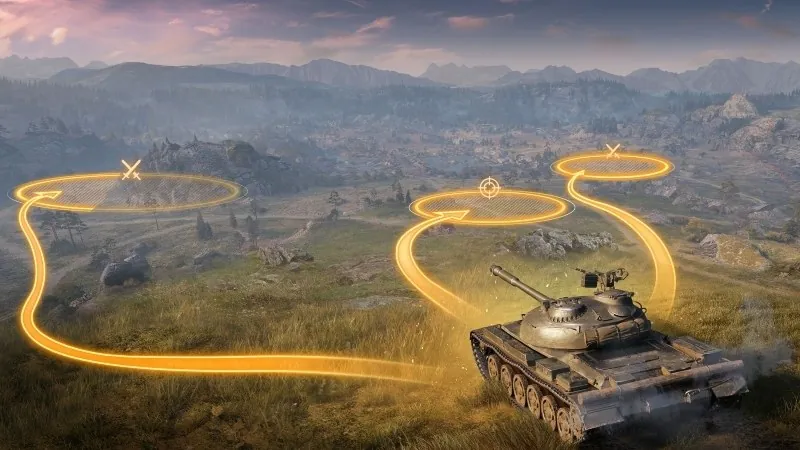
The countdown is 30 seconds of free planning time. Use it instead of looking at the chat.
- Read both team lists. Count heavies, lights and SPGs on each side. Two enemy SPGs mean you avoid open ground that has no hard cover.
- Pick your lane. Based on your class and the map type, choose where you go before you move. Battle Route Tips can help on a map you do not know, and you can switch the feature off in Settings once you do.
- Check where your heavies are heading. If you are a medium, go next to them, not alone to the far flank.
- Drive to cover, not to the enemy. The first trade of the game is decided by who gets to their position first and who gets spotted first.
- Stop and look. At around the one minute mark the first spots happen. Read the minimap: where are the enemy lights, where is their heavy group?
- Commit or adjust. If your flank has twice the enemy numbers, push together. If it is outnumbered, hold a safe position and tell the team.
 Spot Like a Pro (official World of Tanks channel)
The map changes since Update 2.0
Many guides online describe maps from years ago. Here is what changed in the last year, from the official update notes.
- Update 2.0 (August 2025) added the new map Nordskar to Random Battles.
- Update 2.0.1 (October 2025) redesigned Erlenberg, Highway and Overlord and rebalanced Airfield and Fjords.
- Update 2.1 (November 2025) added Random Events to Mountain Pass, Highway and Ghost Town.
- Update 2.2.1 (April 2026) brought Klondike from Grand Battles into Random Battles and reworked Pearl River and Serene Coast. It also added Battle Route Tips.
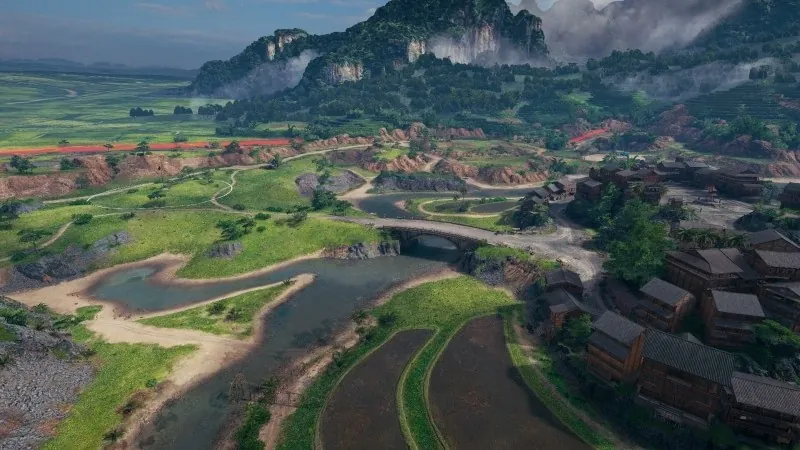
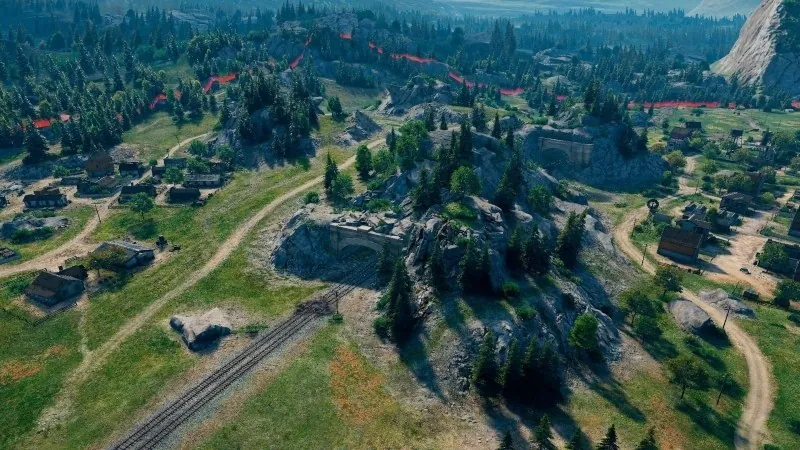
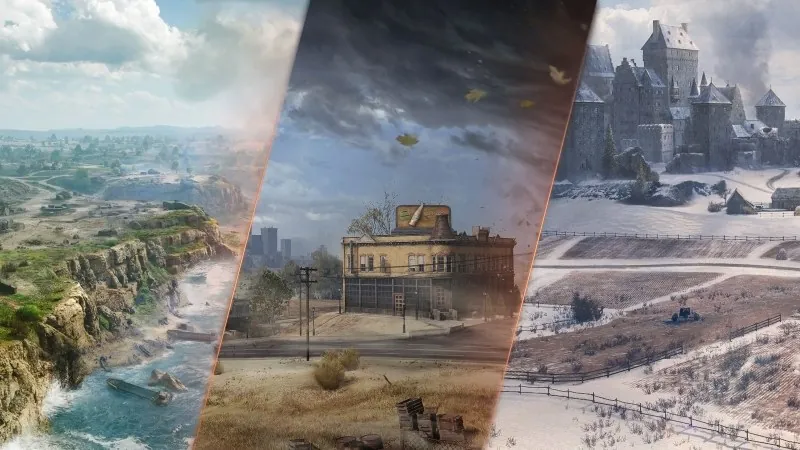
- Update 2.4.1 (October 2026) returned Nebelburg and changed five maps. Himmelsdorf gave the southern team a new city position to counter the northern one. Ruinberg got small changes to lines of fire in the town. Siegfried Line got reshaped fields and more breaches in the town wall. Fisherman's Bay got new positions and different vegetation density, with more cover on the southern team's route into the city blocks. Overlord was adjusted to improve the northern team's positions.
Random Events and fewer repeated maps
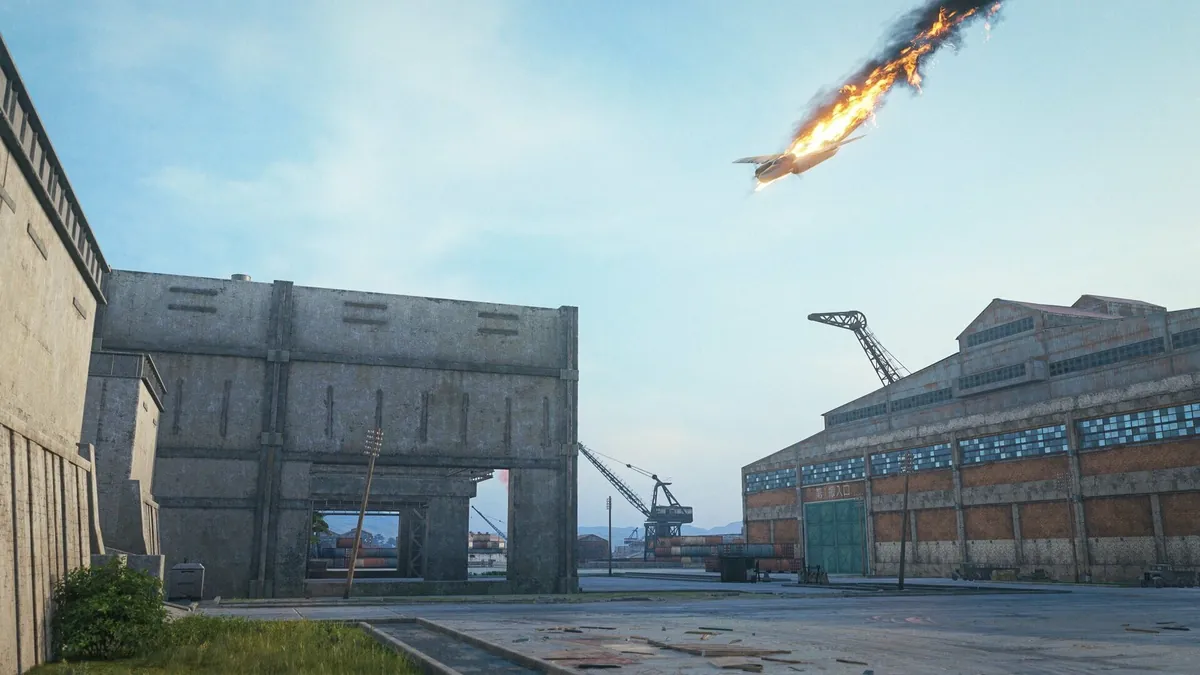
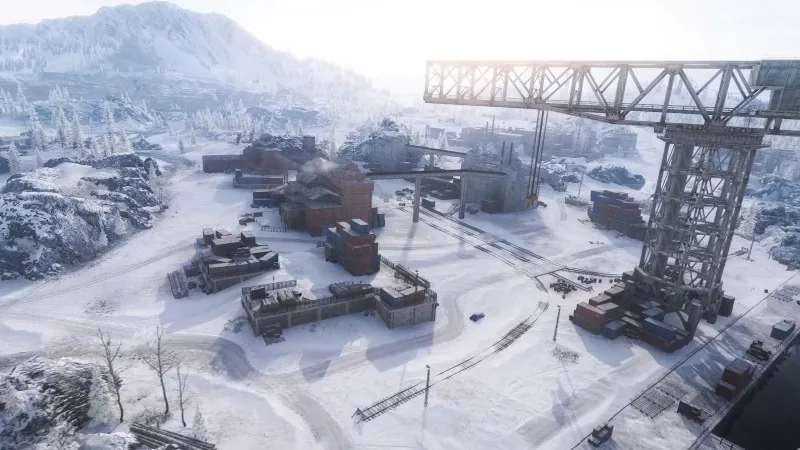
Random Events are scripted changes that can happen during a battle on some maps: a plane crash, a bombing run, a rockslide. They were first added on Himmelsdorf, Ruinberg, Prokhorovka and Safe Haven and later spread to maps such as Pilsen, Malinovka, Karelia, Cliff, Siegfried Line, Mountain Pass, Highway and Ghost Town. The event zone is marked with red smoke, you get a warning when you approach it, and a countdown starts when you enter. An event is not guaranteed and may not happen at all. Do not park inside the zone: large objects created by the event can destroy your tank.
Before, some of these events only ran for players who switched them on in Settings. Since Update 2.4.1 Random Events are enabled for all players, because the new map selection needs one shared queue. That same system is what cut repeated maps. Wargaming says up to 99% of tier VIII to XI sessions of up to 15 battles now have no repeated map, and that the chance of a duplicate map between the 21st and 25th battle of a session dropped to 31% from 99% before the update.
How to learn maps faster
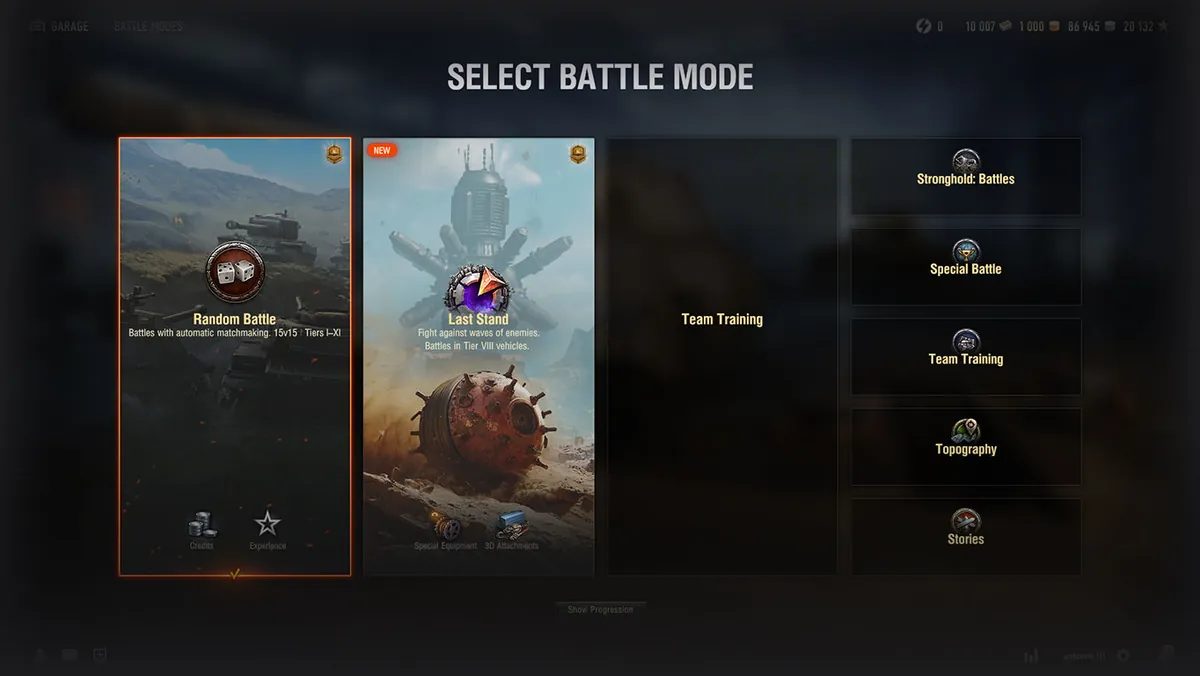
- Topography mode. The battle mode menu includes Topography, a mode Wargaming built for learning maps. Drive the routes you saw in the minimap, check the bushes and the ridges.
- Watch your own replays. Look at the minimap when you died. Were you alone? Were you spotted from a direction you never checked?
- Exclude a map you cannot stand. The account menu has map exclusion slots; Premium Account and WoT Plus add extra ones. Use them on maps that suit your tank worst, not just the ones you dislike.
- Learn three positions per map for your main tank. One aggressive, one safe, one for the late game.
 Update 2.4.1: Season of Action (official World of Tanks channel)
When you have the basics, the beginner guide covers the rest of your first hundred battles, and our best tier X tanks list tells you which tanks hold the key positions best at the top.
FAQ
How do I read the grid in World of Tanks?
Rows are lettered A to K without I, columns are numbered 1 to 0. A square such as E5 is about 100 metres across on a standard 1,000 metre map.
Is Nebelburg in Random Battles in World of Tanks?
Yes. Update 2.4.1 in October 2026 brought Nebelburg from Grand Battles into Random Battles at a reduced size of 1,000 by 1,000 metres.
Where should heavy tanks go in World of Tanks?
To corridors with hard cover: city blocks, castles and ravines where their armor can trade. Avoid open fields where they are spotted and shot from range.
Why do I get the same map over and over in World of Tanks?
Much less often since Update 2.4.1. Wargaming says up to 99% of tier VIII to XI sessions of up to 15 battles now have no repeated map.
Can I turn off Random Events in World of Tanks?
No longer. Since Update 2.4.1 Random Events are enabled for all players because the new map selection system needs a single queue.