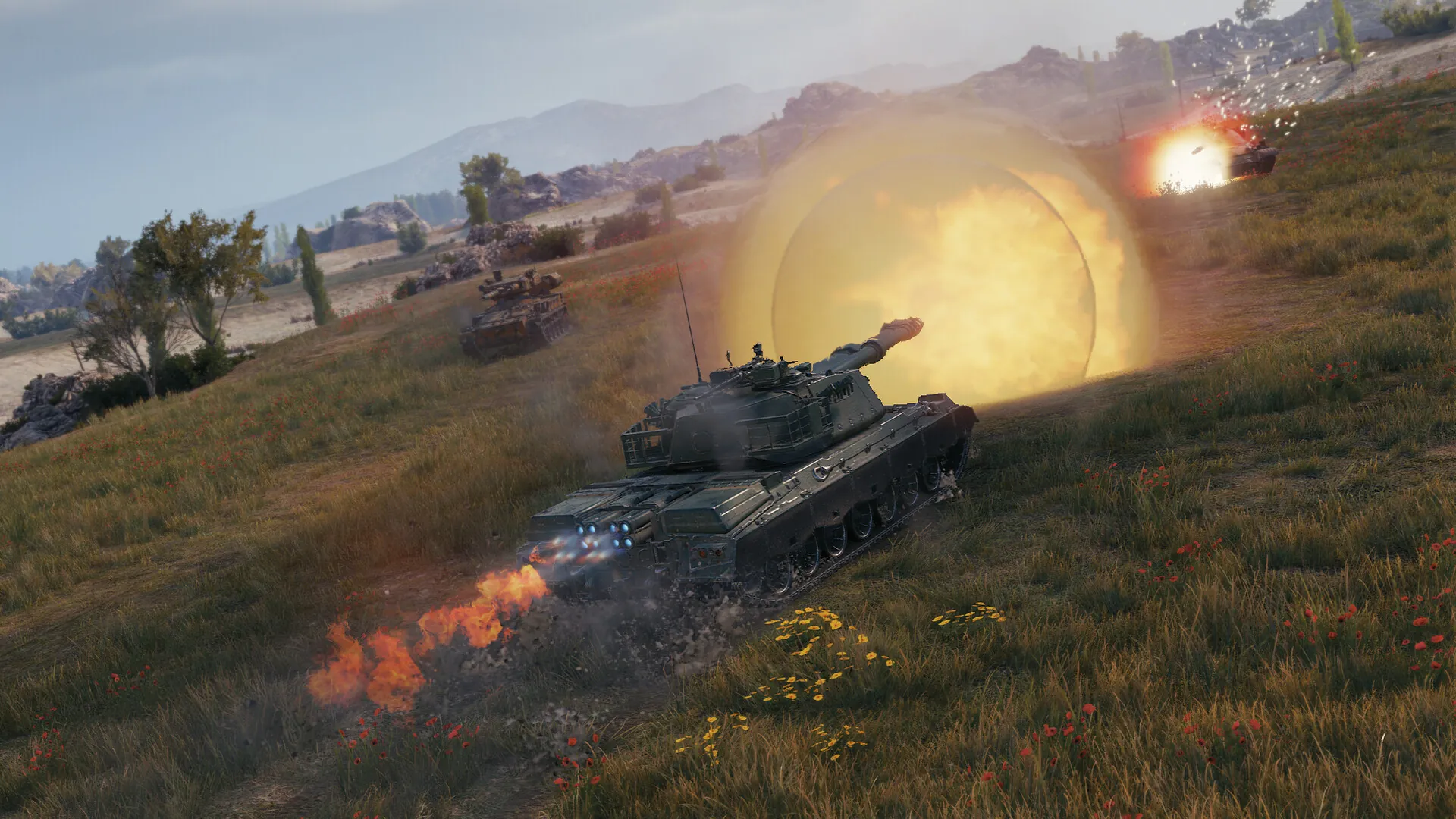
The rules on this page come from Wargaming's newcomer guide, the official wiki's battle mechanics page and the Update 1.13 and 2.2 announcements. Where two sources did not agree on a number, we left it out. For the rest of the game see the World of Tanks hub.
Nominal and effective armor
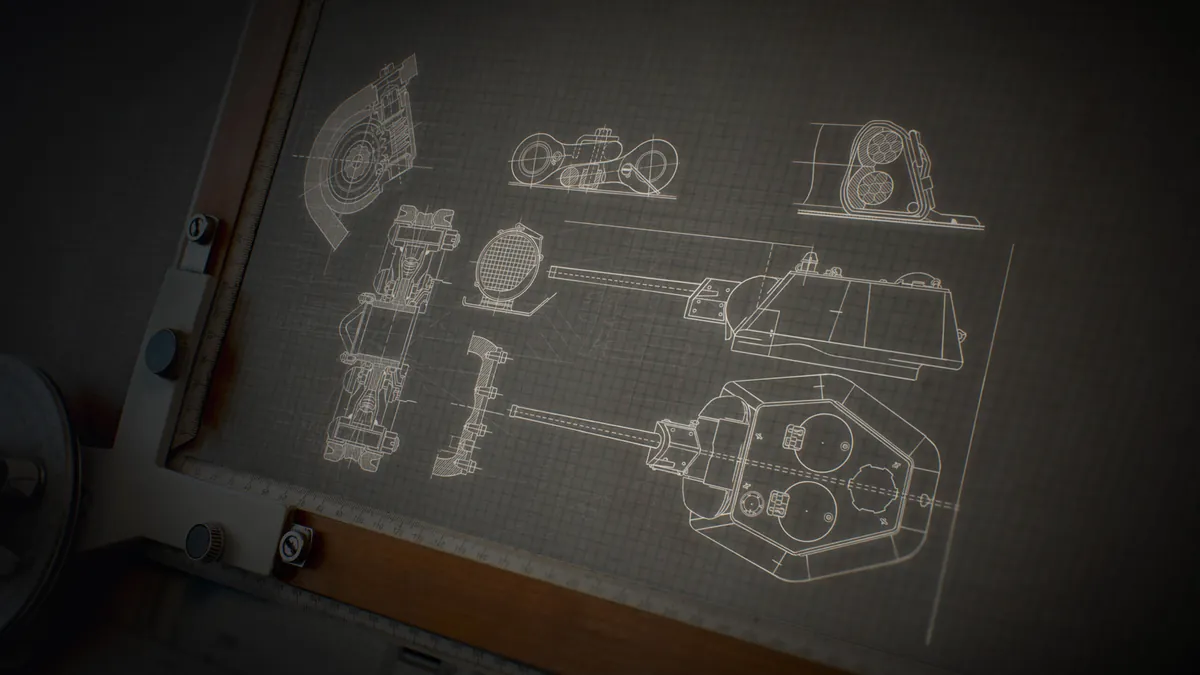
The numbers in the Garage, such as 75/45/45 mm, are the nominal thickness of the main hull plates: front, side and rear. A shell rarely hits square on. The further the impact is from the normal (a line at 90 degrees to the plate), the longer its path through the steel. That path is the effective armor, and it is simply the nominal thickness divided by the cosine of the impact angle.
| Impact angle from normal | Effective thickness of a 100 mm plate |
|---|---|
| 0 degrees | 100 mm |
| 30 degrees | about 115 mm |
| 45 degrees | about 141 mm |
| 60 degrees | 200 mm |
| 70 degrees | about 292 mm, and AP or APCR ricochets beyond this |
The curve is steep at the end: the last 10 to 20 degrees add far more armor than the first 30. That is the whole idea behind angling and sidescraping. Wargaming's own beginner advice is short: do not face incoming fire directly, keep your armor slightly offset.
Ricochets, normalization and overmatch
Three rules sit on top of effective armor:
- Ricochet. AP and APCR shells bounce off when they hit at more than 70 degrees, whatever their penetration. HEAT bounces only above 85 degrees. HE never ricochets: it explodes on the surface.
- Normalization. AP and APCR turn slightly toward the normal on impact, which shaves a few degrees off the angle. APCR normalizes less than AP. HEAT and HE do not normalize at all, so for them the full angle counts.
- Overmatch. If an AP or APCR shell's caliber is more than twice the nominal plate thickness, it normalizes more. If it is more than three times the plate, it cannot ricochet at any angle. A 130 mm gun against a 40 mm plate is the wiki's example. Overmatch does not grant penetration: the shell still needs enough to get through the effective thickness.
Penetration and damage also roll on every shot: the shell's penetration varies by up to 25% either way around the listed average, and so does damage. That is why a shot sometimes fails on a plate you penetrated a minute ago.
Shell types and what they do
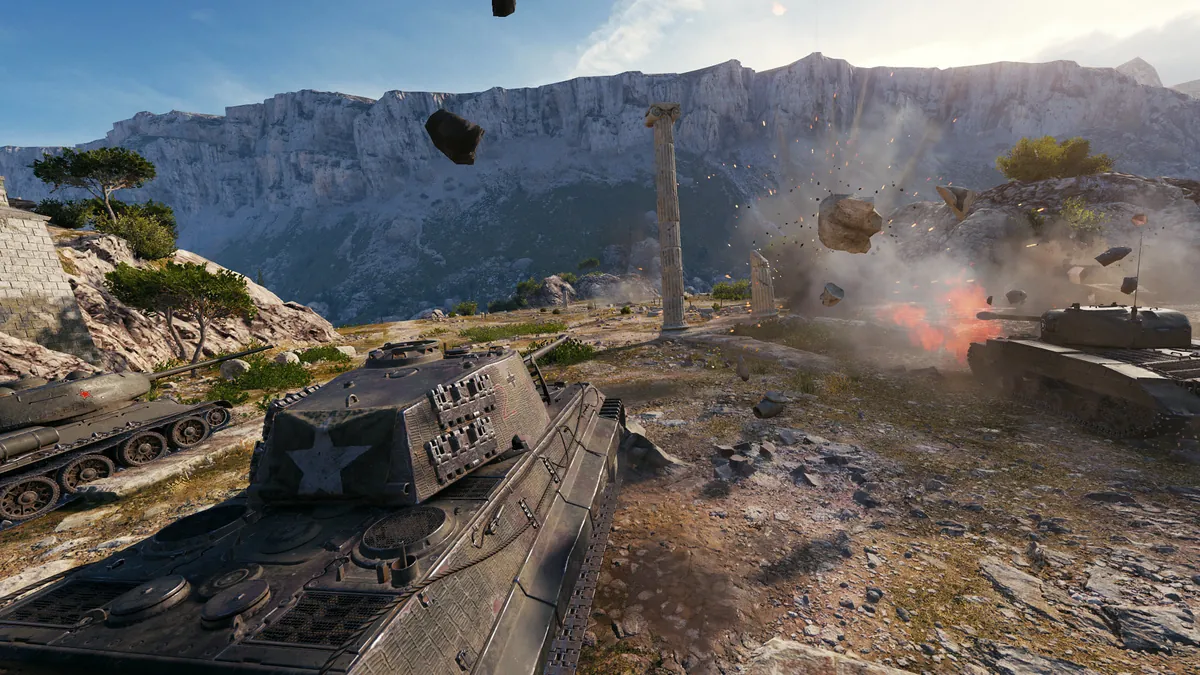
Most guns carry three shell types. Most players run standard ammo and a stack of the premium round, with HE for special cases.
| Shell | Ricochet above | Normalization | Penetration over distance | Damage when it fails to penetrate |
|---|---|---|---|---|
| AP (armor piercing) | 70 degrees | Yes | Small loss | None |
| APCR (composite rigid) | 70 degrees | Yes, less than AP | Larger loss, except default APCR rounds | None |
| HEAT (shaped charge) | 85 degrees | None | No loss | None |
| HE and HESH (high explosive) | Never | None | No loss | Reduced damage at the point of impact, less on thick armor |
AP is the all rounder. APCR is fast and hits hard on flat plates up close, but drops off over long range. HEAT keeps full penetration at any distance and bounces much less, but tracks, side skirts and spaced plates stop it more often than they stop AP, and it gets no help from normalization against angled plates. If a target shows you a screen, load AP or aim around it.
HE after the rework
Update 1.13 rebuilt how HE does damage, and those rules still apply to tanks today:
- Penetration: nothing changed. A penetrating HE shell does full damage.
- No penetration: damage is calculated at the point of impact. The thicker the plate there, the less damage. Firing HE into the thick front of a heavy is now a poor trade.
- No more splash on the outside. Shooting the ground under a tank no longer damages its floor. HE on tanks works like AP: it has to hit the vehicle.
- Screens and tracks: HE can now pass through tracks, wheels, spaced armor and external modules, but loses three times their thickness in penetration. A 20 mm screen costs 60 mm. If it does not get through the screen, it does no damage at all.
Artillery shells still work under the older splash rules and can stun the crew. The Driver perk Reliable Placement now absorbs 15% of HE damage, which matters most on heavies (see crew perks).
Spaced armor, tracks and modules
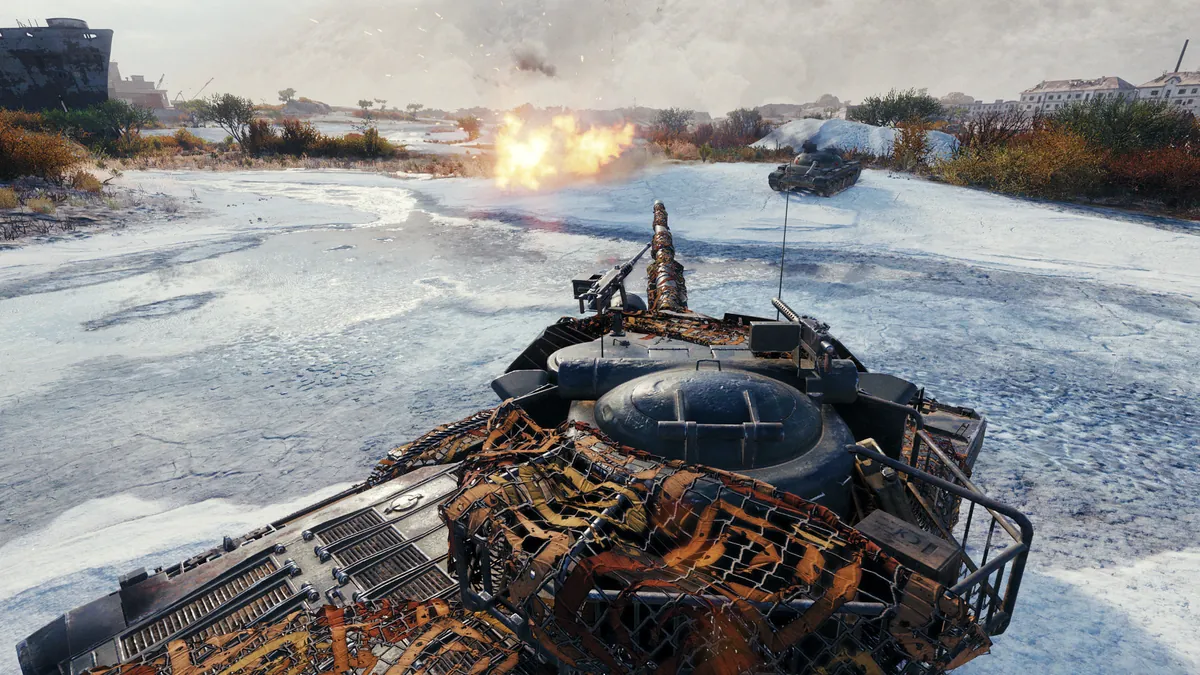
Not every plate on a tank is part of the hull. Spaced armor (side skirts, mantlet screens, slat cages) and the tracks sit in front of the real armor, and they change what happens to the shell:
- AP and APCR are normalized on the screen, lose penetration equal to the effective thickness of that screen, then are normalized again when they meet the hull. A shot that would have gone through bare side armor can fail after a thick skirt.
- After penetrating, a shell keeps flying inside the vehicle for ten times its caliber, so a 100 mm shell travels about one meter. Anything in that path, modules or crew, can be hit as long as penetration is left.
- Tracks and skirts are not part of the damage model. A shell stopped there does no hit point damage, which is why sidescraping tanks love to take shots on the tracks.
- Modules are not all bad news for the shooter. When you cannot penetrate, track the enemy so stronger teammates can finish him; Wargaming's guide still recommends exactly that against heavier tanks. Wheeled vehicles lose wheels one by one and slow down with each, they rarely stop from a single shot.
Your own crew perks play into this too. Safe Stowage makes the ammo rack 25% tougher, Firefighting puts fires out 80% faster and Repairs gets broken tracks back sooner: Safe Stowage and Repairs are on our heavy tank list in the crew guide.
Angling, sidescraping and hull down
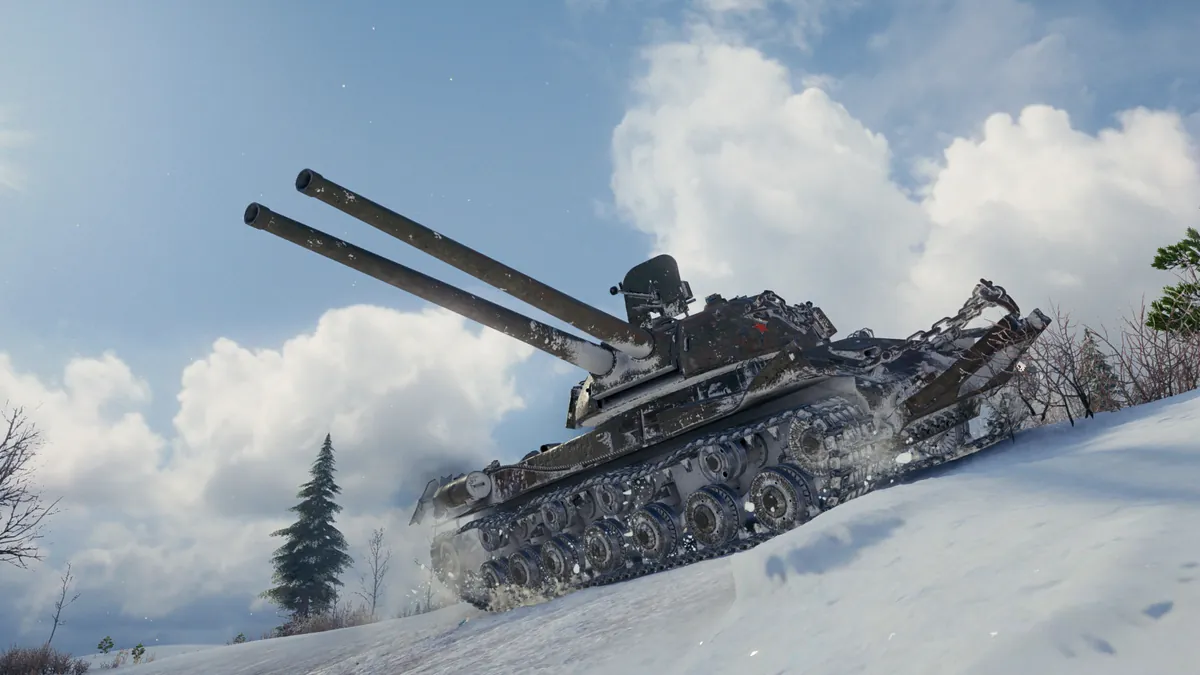
- Angle the front, a little. Turn your hull so the enemy's shot meets your front plate at an angle, while your side does not become flat to him. Turn too far and you show a side plate square on.
- Sidescrape around corners. Park with the front of your hull hidden behind a building or rock and show only a steeply angled side. Shells meet the side near or beyond 70 degrees and often hit tracks first. Back up to fire, then pull forward to hide again. Wargaming's Tank Coach series teaches the same move.
- Go hull down on ridges. Put the hull behind a crest so only the turret shows. This needs gun depression: the new German heavies of Update 2.4 have 9 degrees on the Versuchspanzer 57 and 11 on the tier XI Pz.Kpfw. Neu. Check your own tank's value in the Garage before you pick a ridge. The maps and positions guide lists ridge positions by map.
- Do not wiggle into a flat angle. Turning back and forth while reloading is fine; stopping square to an enemy at the wrong moment is how most heavies die.
- Mind overmatch. Angling only works against guns that cannot overmatch your plates. Against a 152 mm gun, a thin tank is better hidden than angled.
Weak spots to aim at
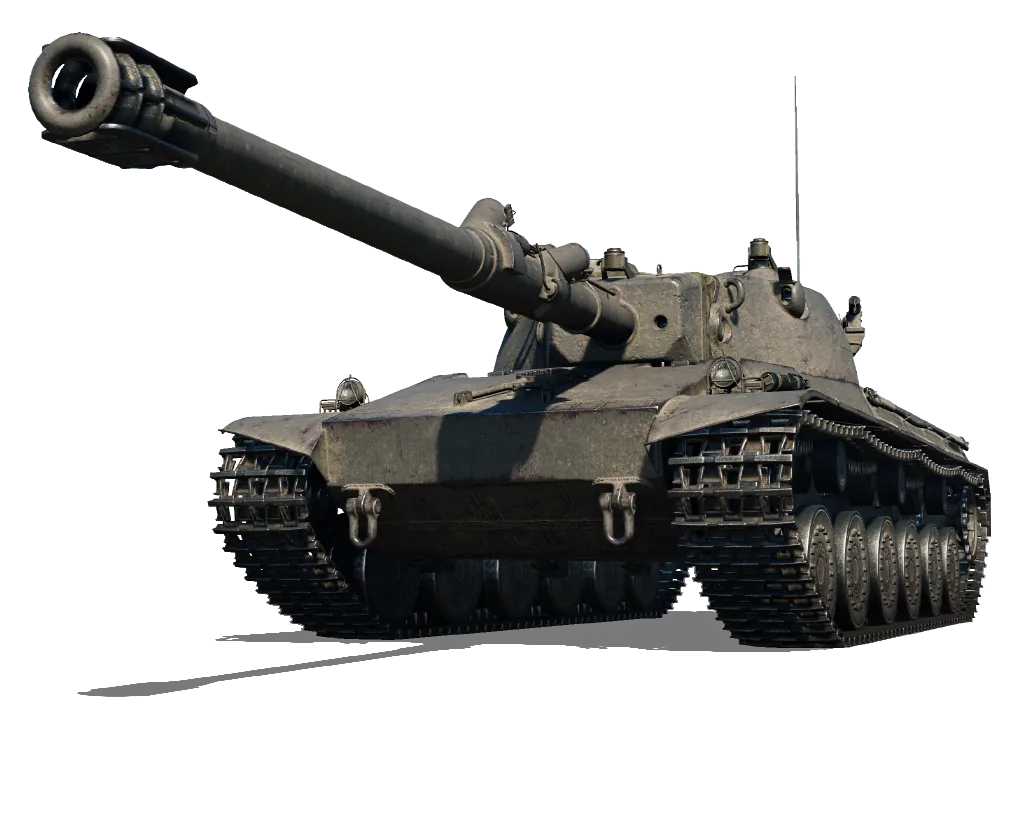
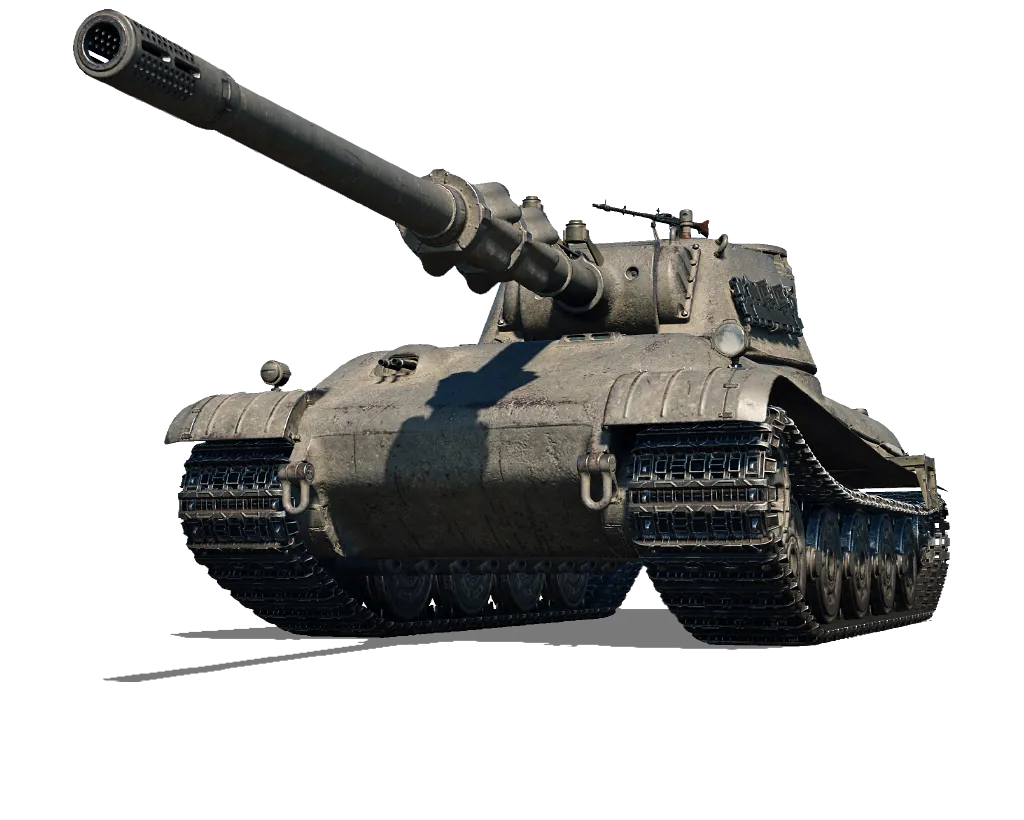
Every tank is different, but the official newcomer guide names the same common weak spots: the lower front plate, the commander's cupola and the turret roof, plus the sides and rear. Add the driver's hatch, machine gun ports and flat turret cheeks on some designs. Do not assume: on some tanks the lower plate or cupola is thick, and the gun mantlet is usually among the strongest parts.
- Hull down target: cupola or turret roof, and wait for him to rise up to shoot.
- Sidescraping target: do not shoot the angled side. Wait for the corner of the front plate, the turret when it swings, or the moment he backs out.
- Angled target: the far side, the lower plate under the angle, or tracks to keep him in place for teammates.
Armor Inspector and Armor Flashlight
The Armor Inspector in the Garage shows any vehicle in the game, owned or not. Hover over a plate to see its nominal thickness, its effective thickness along your view and the hit angle. Update 2.2 made it far more useful: you pick a specific attacking vehicle, its gun and its shell type, and you can rotate the turret and gun on the model. That lets you test both sides of the duel: where your tank holds against a specific gun, and where you go through a specific enemy.
In battle, the Armor Flashlight does a lighter version live. In sniper mode, press Y: the armor around your aiming point turns red (low to no chance), yellow (moderate) or green (high). It works out to 300 m, starts with a short delay and is off by default; turn it on in Settings, Reticle tab, if you want it every battle. Like the classic penetration indicator, treat it as a guide: the dispersion circle still decides where the shell lands.
- Open your own tank first. Pick the gun and shell of a common enemy at your tier and rotate the model to find the angles that bounce it.
- Then the tanks that kill you most. Five minutes on two or three common enemies pays off for hundreds of battles.
- Check after rebalances. Branch rebalances change armor too: the Ares changes in 2.2 refined armor in certain areas. Recheck a tank after its line is touched.
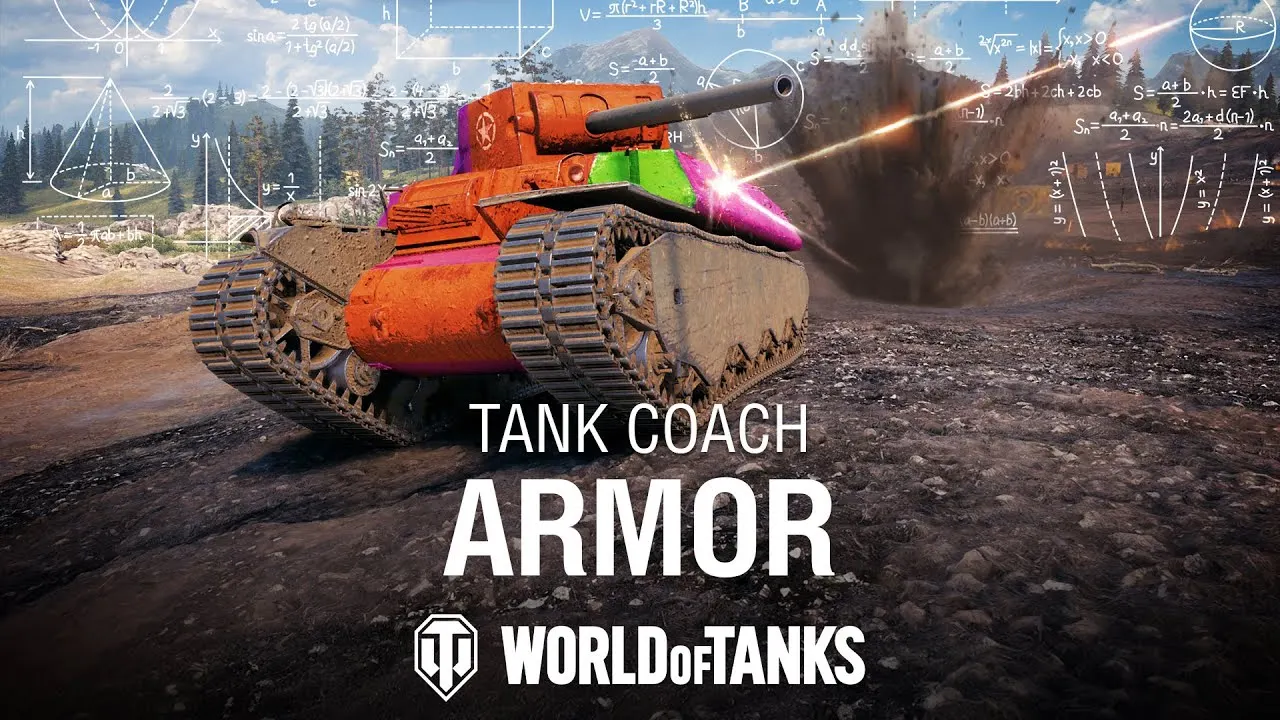 Master Your Armor (official World of Tanks channel)
Armor is half the game, and the other half is your gear and crew: Gun Rammer and Vertical Stabilizer in the equipment guide, and the class roles in tank classes explained. New players should read the beginner guide first.
FAQ
How does overmatch work in World of Tanks?
If an AP or APCR shell's caliber is more than three times the nominal thickness of the plate, it cannot ricochet at any angle. Above two times, it gets extra normalization. The shell still needs enough penetration to get through.
At what angle do shells bounce in World of Tanks?
AP and APCR shells ricochet when they hit at more than 70 degrees from the normal. HEAT ricochets above 85 degrees. HE never ricochets; it explodes on the surface.
How do you calculate effective armor in World of Tanks?
Divide the nominal thickness by the cosine of the impact angle. A 100 mm plate hit at 60 degrees is 200 mm effective, at 30 degrees about 115 mm.
Is HE good in World of Tanks after the rework?
Against thin armor and open topped vehicles, yes. Since Update 1.13 a non penetrating HE shell deals reduced damage at the impact point, less on thick plates, and screens or tracks cost it three times their thickness in penetration.
How do I use the Armor Inspector in World of Tanks?
Select a vehicle in the Garage and open the Armor view. Since Update 2.2 you can choose an attacking vehicle, gun and shell, rotate the turret, and see nominal armor, effective armor and hit angle for every plate.
What is sidescraping in World of Tanks?
Hiding the front of your hull behind cover and showing only a steeply angled side, so enemy shots hit near or above 70 degrees or land on the tracks.