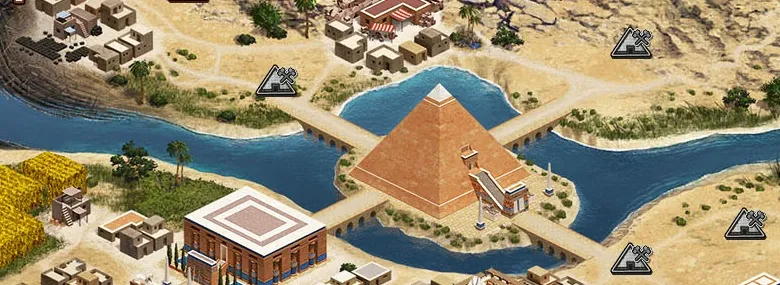
The Anocris hub has the overview. Here we go building by building. The roles and rules come from the administrators' building guide on the official forum; the research bonuses from the official research guide.
The resources that run your city

Four resources are produced in your city and two are special:
| Resource | Produced in | Stored in | Main use |
|---|---|---|---|
| Clay | Clay mine | Warehouse | Construction, units |
| Granite | Granite quarry | Warehouse | Construction, units |
| Papyrus | Papyrus Plantation | Warehouse | Research and much of the early game; the scarce one |
| Wheat | Wheat field | The field itself | Feeds population and troops, pays for marches, research and rituals |
| Lapis lazuli | Nomad victories, quests, shop | Account | Hatshepsut Palace and special costs; cannot be traded or plundered |
| Amethysts | Purchase, rewards | Account | Premium shop items |
There is no level cap on production buildings. The official guide says to keep upgrading them for as long as it pays, because every level raises output. Two research projects add to production directly: Irrigation for papyrus and Mineralogy for granite, each up to +50 percent.
Players on the official forum use a simple conversion when they compare loot: one granite is worth two clay and one papyrus four clay. It is a rule of thumb, not a game value, but it shows how much rarer papyrus is.
Core buildings: population, storage and research
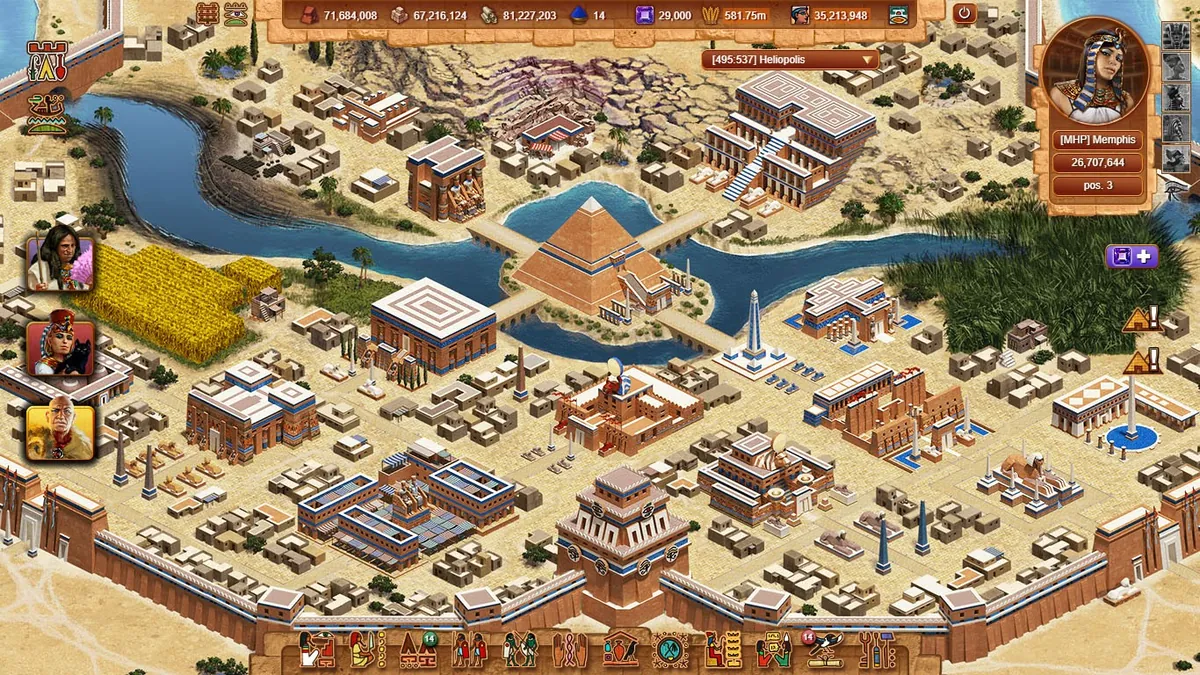
- Pyramid (Cheops Pyramid). Population growth. Each new level starts growth towards a higher cap; once the cap is reached you need the next level. Every building and unit uses population, so this is the building that blocks you most often.
- Warehouse. Storage for clay, granite and papyrus. Anything collected above capacity is lost, and deliveries to a full Warehouse go back to the sender.
- Serdab. Hides resources from plunder automatically. Each level hides more. The official beginner tips call it one of the best early upgrades because its capacity is high compared to a young city's stock.
- Library. Runs research. Each level shortens research time. Research counts for the whole account, so start it in the city with the best Library, usually your capital.
- Market. Swaps one resource for another at a fixed rate. Level 5 in both cities is needed to send resources between your own cities.
Military and defense buildings
| Building | Role | Key rule |
|---|---|---|
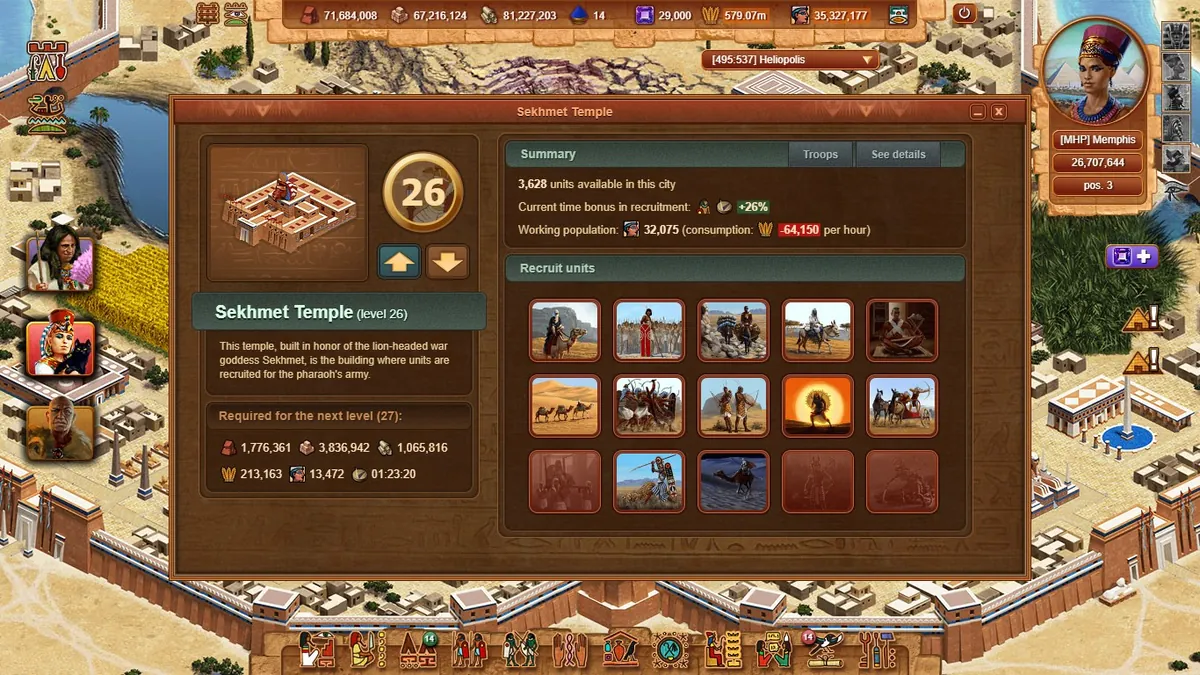
| Sekhmet Temple | Recruits units | Each level cuts recruiting time; level 5 in both cities to move troops between them |
| City Wall | Defense | Attackers must break one wall level before fighting your troops; each successful attack destroys one level, never below level 1 |
| Migdol | Early warning | Shows incoming troops and their mission; must be 3 levels above an attacker's Espionage to show their troops |
| Imhotep Temple | Healing | Wounded units arrive automatically; higher levels widen the share that can be healed |
| Horus Fort | Allied troops | Each level holds one allied troop; only for members of your tribe |
| Kenbet | Tribe building | Level 1 to join a tribe, level 3 to found one |
The wall rule has a practical side for raiders: after you wipe out a nomad camp's troops, the rest of its wall still stands. Send combat units with your traders on the second hit or you will not get in.
Temples of the gods: Amun and Imhotep
The Amun Temple holds rituals. Its levels shorten ritual times, and it does two jobs:
- Spells change the season of one city. When the spell finishes, that city switches season. Each season has its own effects on production, defense and troops, and the temple shows the advantages and disadvantages of each spell when you click it.
- Festivals give strong short boosts, such as +100 percent combat power (the Sed Festival) or +100 percent unit speed. Festivals run per city, only one at a time; starting a second one ends the first.
Two research projects shorten the waits: Glassmaking cuts spell cooldowns (up to 80 percent) and Maat cuts festival cooldowns (up to 50 percent).
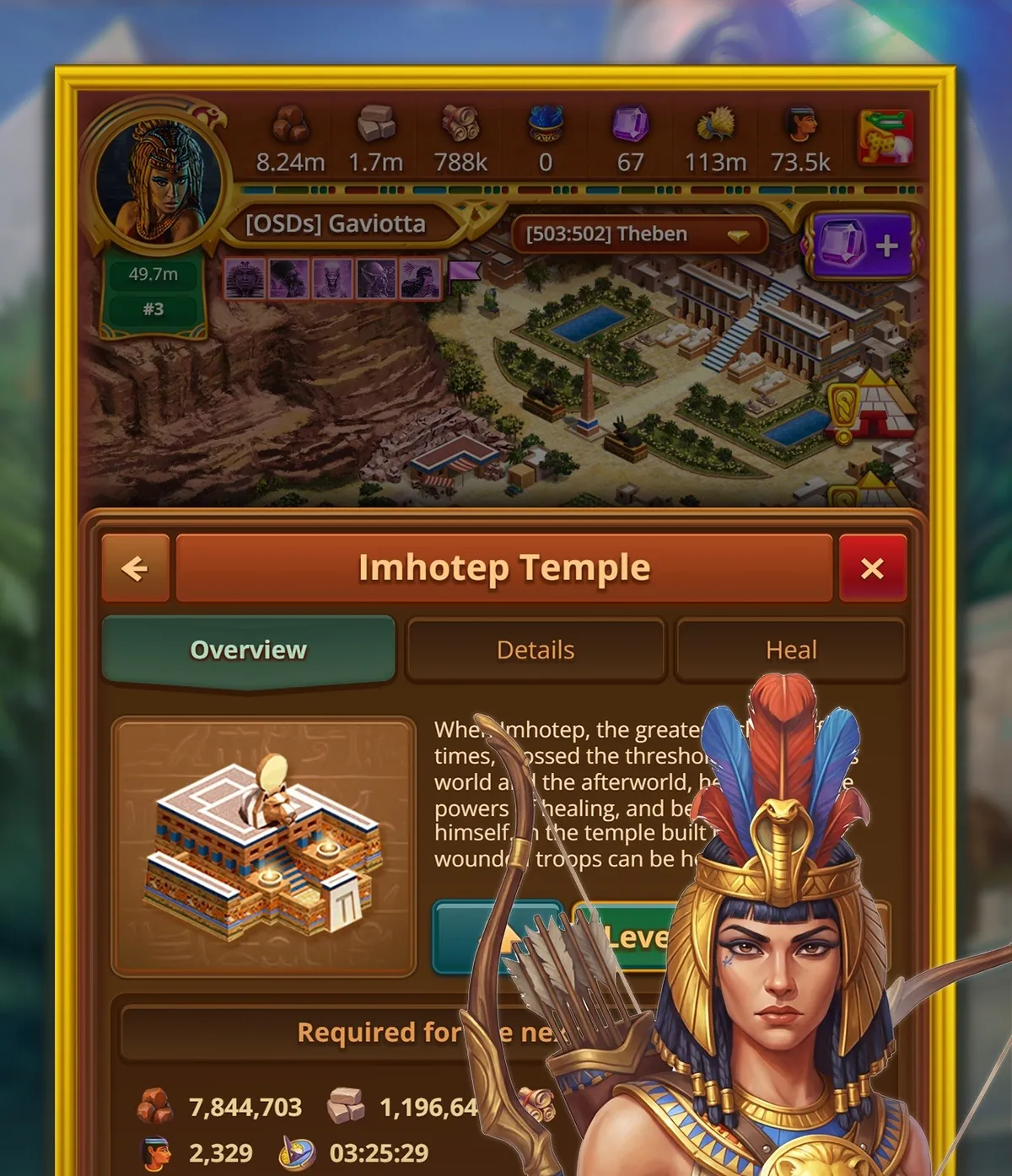
The Imhotep Temple is the one new players skip and then regret. Each battle sends your wounded here, and the share you can save is random within a range that grows with the temple level. Herbal Medicine lowers healing costs and Mummification healing time, each by up to 70 percent.
Expansion: the Hatshepsut Palace and colonies
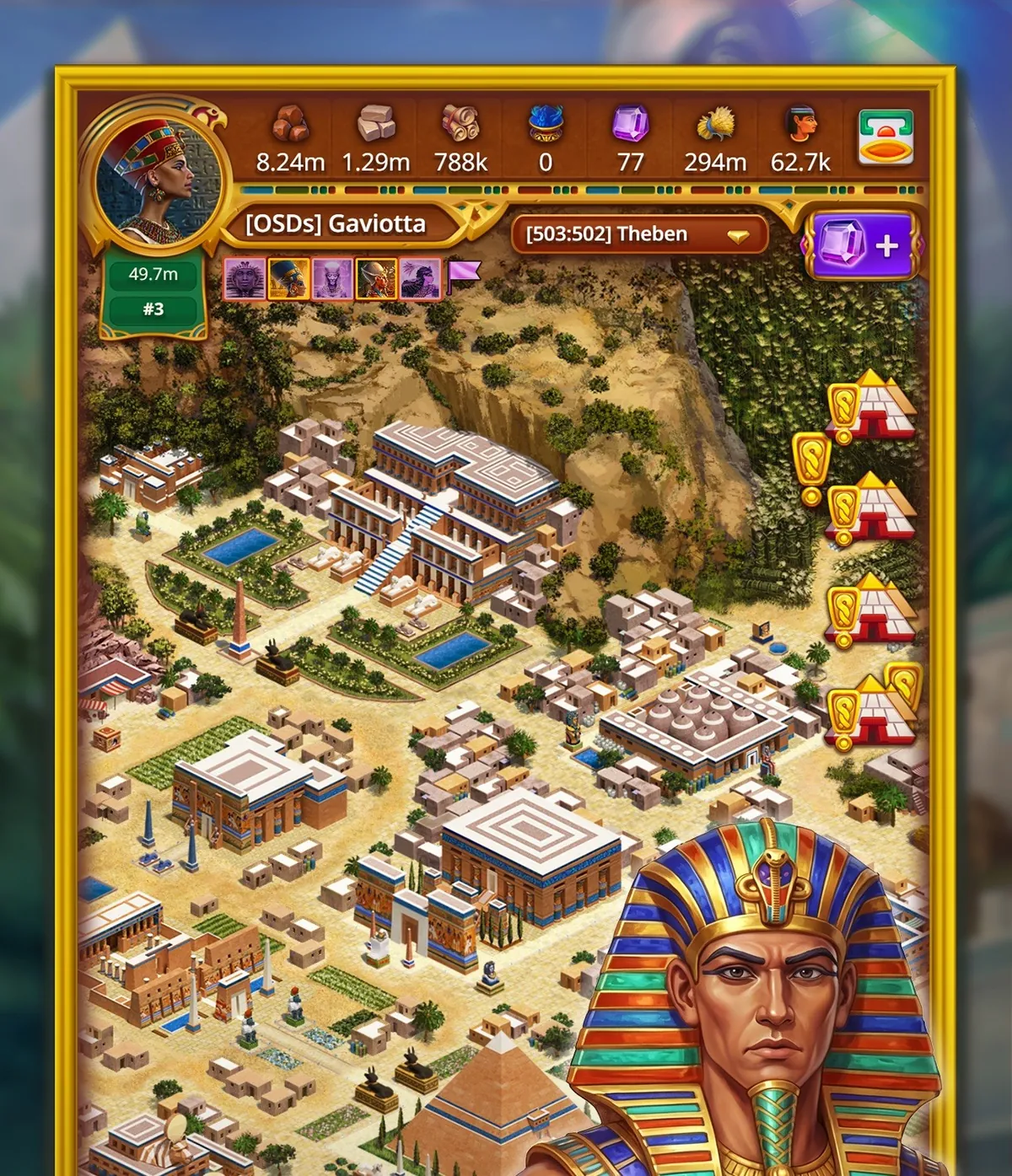
Every level of the Hatshepsut Palace allows one new city. Level 1 costs, among other things, 6 lapis lazuli. Then:
- Recruit a Vizier in the Sekhmet Temple.
- Pick a free spot on the world map; clicking it shows "Found city" if it is available.
- Send the Vizier with the Found City command. A Vizier carries 5,500 resources without bonuses, and a few extra units can carry more.
- Do not overload. The new city has no Warehouse yet, so storage is tiny.
- Upgrade the palace again for the next colony. There is no limit on the number of colonies, only the palace cost.
Colonies cannot be conquered, and you can move a city with the White, Red or Double Crown shop items. A player on the Polish forum tested building the palace in a colony in 2026 and reported it does nothing; level it in your capital.
Wheat: the resource that feeds everything
Wheat behaves differently from the other three. It is not kept in the Warehouse but on the wheat field, and it is spent constantly: your working population eats it (the Sekhmet Temple screenshot above shows a late city burning more than 64,000 wheat per hour), every march costs wheat according to each unit's rate, and allied troops stationed in your Horus Fort eat your wheat, not their owner's.
The staff guide on joint attacks spells out what happens when it runs out. A host without wheat cannot move any troops, even allied ones, and if the shortage lasts, the stamina of every troop in the city drops. Keep a margin, upgrade the wheat field with the pyramid, and remember that the Edfu Festival, available during The Treasure of Tutankhamun, makes marches free of wheat for troops sent while it is active.
Bonus buildings and what to upgrade first
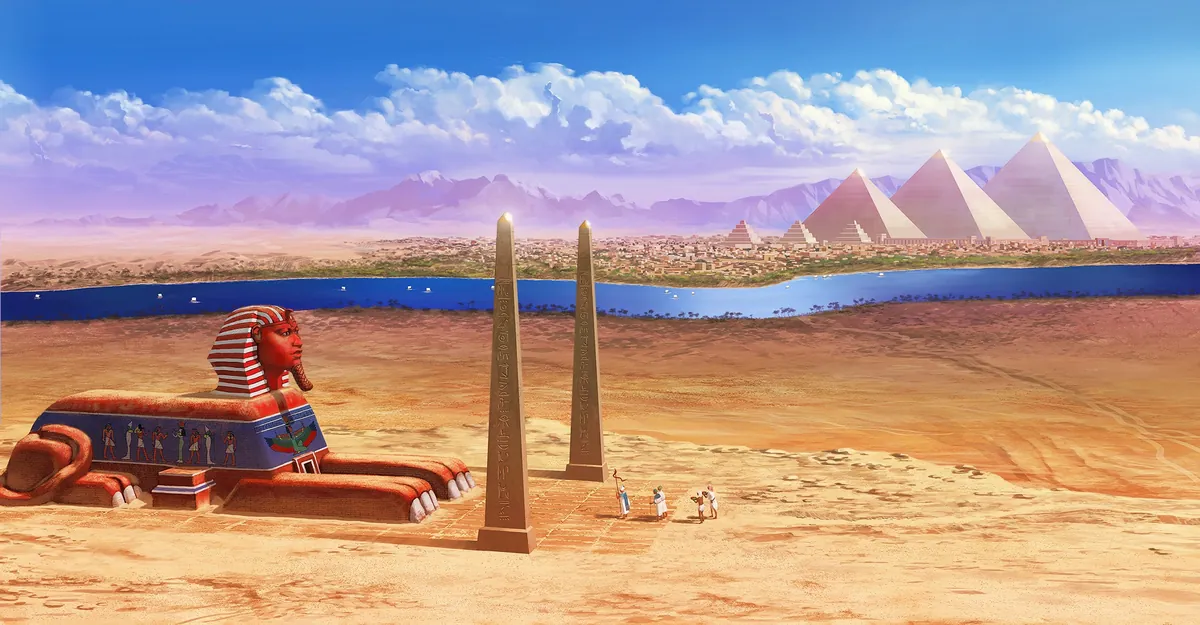
Four buildings give flat bonuses to your army:
| Bonus building | Bonus |
|---|---|
| Colossi of Ramses | Unit speed |
| Obelisk | Combat power |
| Sphinx | Stamina (defense) |
| Sun Villa | Luck, up to 10 percent extra combat power per battle |
The Sun Villa sets only the upper limit of luck; the real value is rolled between 0 and that limit in each battle. The combat simulator FAQ puts the cap at 10 percent, and a player on the forum noticed that levels above 10 did not raise it further.
A build order that follows the official tips:
- Papyrus Plantation, then the other three production buildings.
- Pyramid whenever population blocks you.
- Library and Espionage research to 15 for the simulator.
- Sekhmet Temple for Hyksos spearmen and Bedouins.
- Serdab and Warehouse before your beginner protection ends.
- Kenbet 1, then Imhotep Temple, City Wall and Migdol.
- Hatshepsut Palace as soon as you have 6 lapis lazuli.
Research: the multipliers behind everything
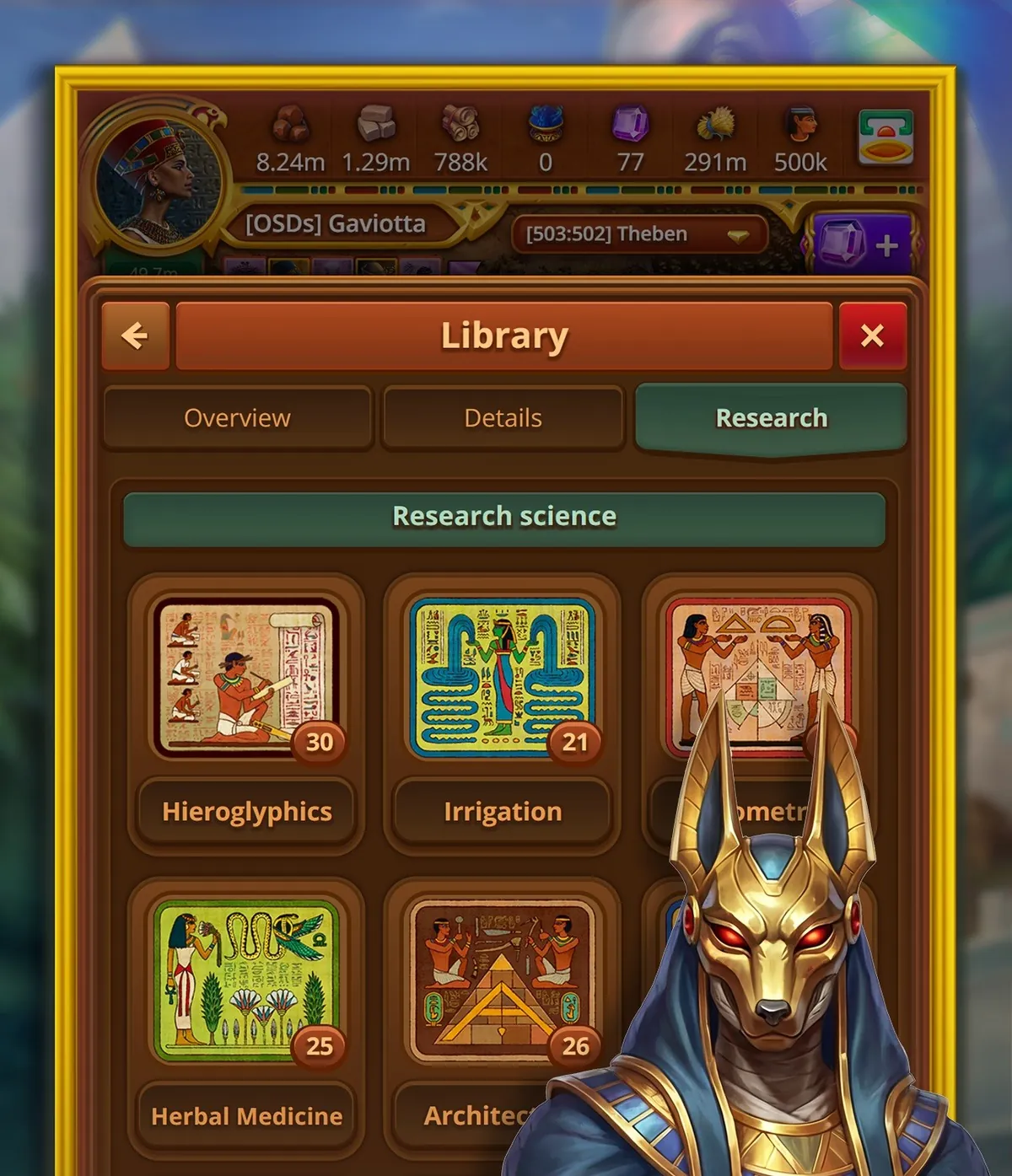
Research is account wide. These are the bonuses from the official research guide (maximums) and the per level values from the long standing player guide on the same forum:
| Research | Effect | Per level | Maximum |
|---|---|---|---|
| Hieroglyphics | Research costs | -1% | -80% |
| Irrigation | Papyrus production | +0.5% | +50% |
| Geometry | Construction costs | -1% | -80% |
| Herbal Medicine | Healing costs | -1% | -70% |
| Architecture | Construction time | -1% | -80% |
| Measurement | Warehouse space | +1% | +80% |
| Treaties | Serdab capacity | +1% | +80% |
| Espionage | Spy success, simulator at 15 | n/a | n/a |
| Barter | Carrying capacity | +1% | +80% |
| Mineralogy | Granite production | +0.5% | +50% |
| Glassmaking | Spell cooldown | -2% | -80% |
| Mummification | Healing time | -2% | -70% |
| Alchemy | Unit costs | -1% | -80% |
| Zodiac | Extra loot | +1% | +40% |
| Maat | Festival cooldown | -2% | -50% |
Early priorities: Espionage to 15, Geometry and Architecture for cheaper, faster building, Hieroglyphics so the rest gets cheaper, then Barter 5 to unlock level 3 nomad camps. For the army side, read the units and combat guide; for a day to day routine, the tips for fast progress.
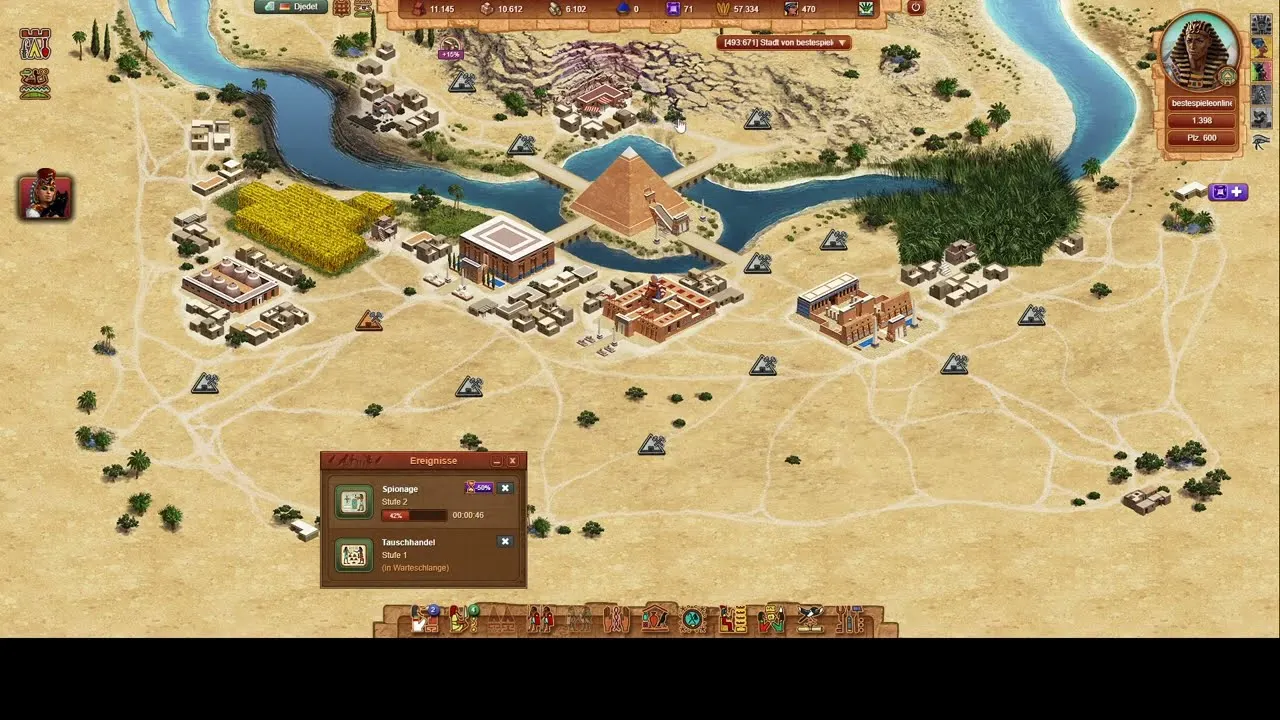 Anocris gameplay: city building and first steps (BesteSpieleOnline)
FAQ
What resources are there in Anocris?
Clay, granite, papyrus and wheat are produced in your city. Lapis lazuli comes from nomad victories, quests and the shop, and amethysts are the premium currency.
What does the Serdab do in Anocris?
It hides part of your clay, granite and papyrus from plunder automatically. Each level hides more, and the Treaties research raises its capacity by up to 80 percent.
How do I build a second city in Anocris?
Build the Hatshepsut Palace (level 1 needs 6 lapis lazuli), recruit a Vizier in the Sekhmet Temple and send him to a free spot on the world map with the Found City command.
Is there a maximum level for buildings in Anocris?
Production buildings have no level cap; the official guide says to keep upgrading as long as it pays. Bonus effects can cap out, for example luck from the Sun Villa stops at 10 percent.
Why do my resources disappear when I collect them?
Your Warehouse is full. Anything collected above its capacity is lost. Upgrade the Warehouse or research Measurement for up to 80 percent more space.
Where is wheat stored in Anocris?
Wheat stays on the wheat field and is not kept in the Warehouse. It feeds your population and troops and pays for every march.