If you have not built your first army yet, read the beginner guide first, and see the Tentlan hub for the big picture. Everything here is based on the developers' battle system guide and the attack, defense and barbarian FAQ on the official forum.
The unit roster
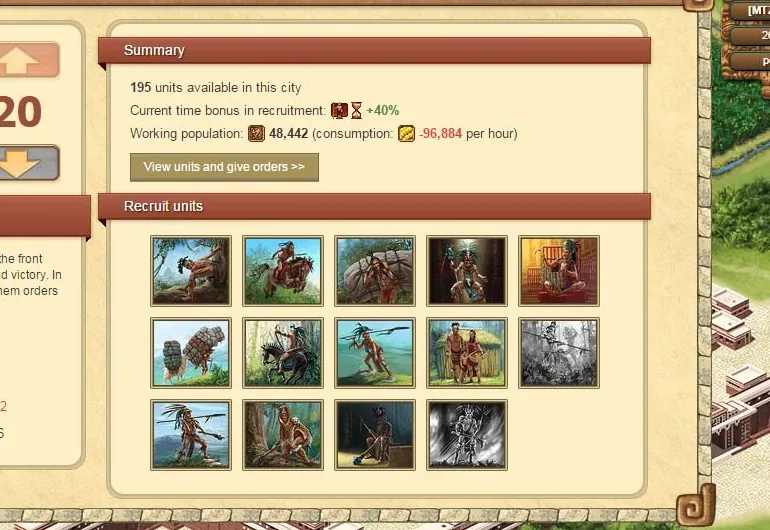
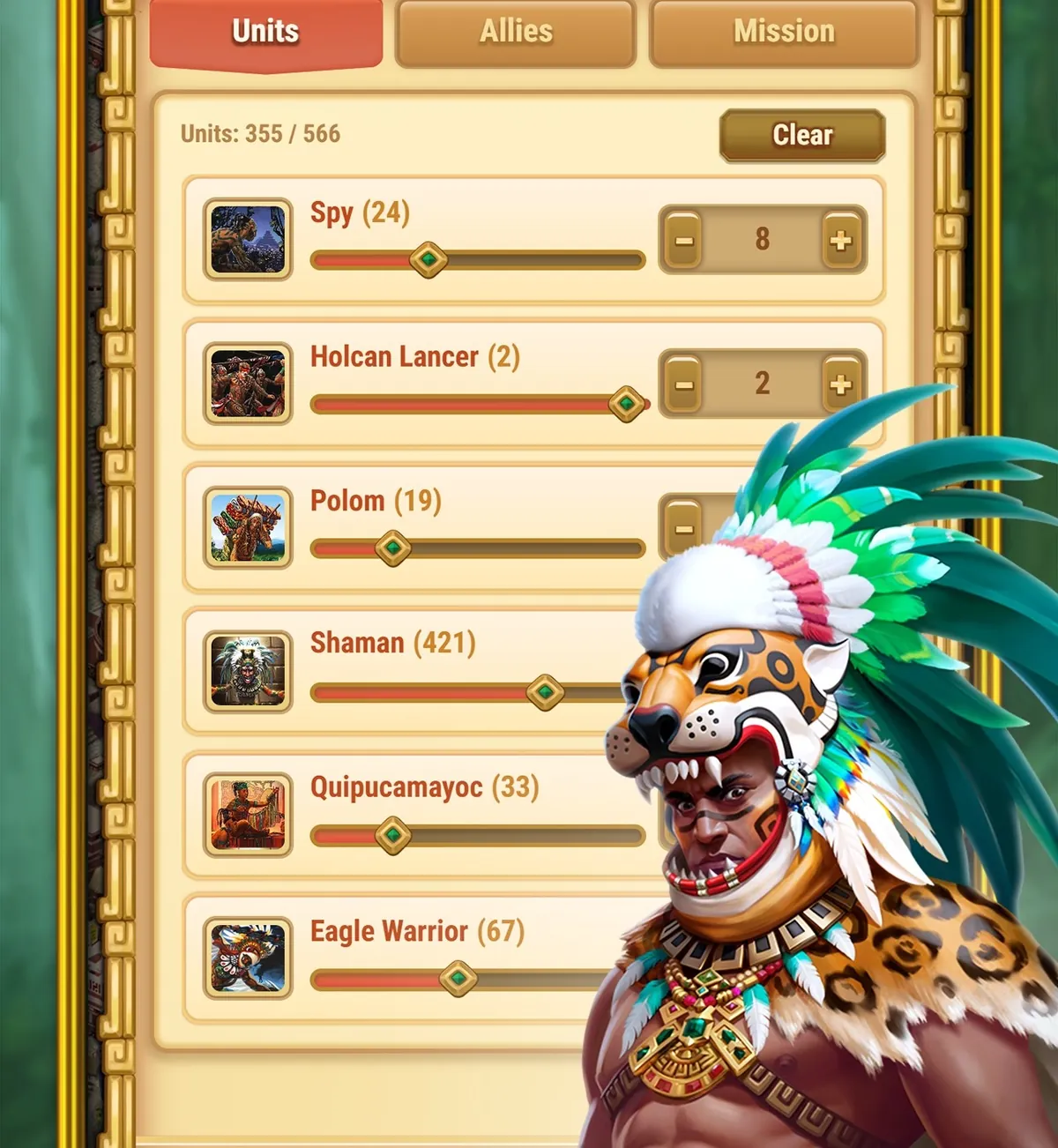
All units are recruited in the Jaguar Temple, where you can also click any portrait for its current stats. Those stats already include your bonuses. Tentlan splits units into two groups, and the split matters in battle:
| Unit | Group | Role |
|---|---|---|
| Holcan Lancer | Combat | First unit; 5 lancers beat a level 1 barbarian camp |
| Holcan Bowman | Combat | Early raider; FAQ example 37 for level 2, 170 for level 3 |
| Atlatl Hunter | Combat | Mid game mass unit; 850 for level 4 |
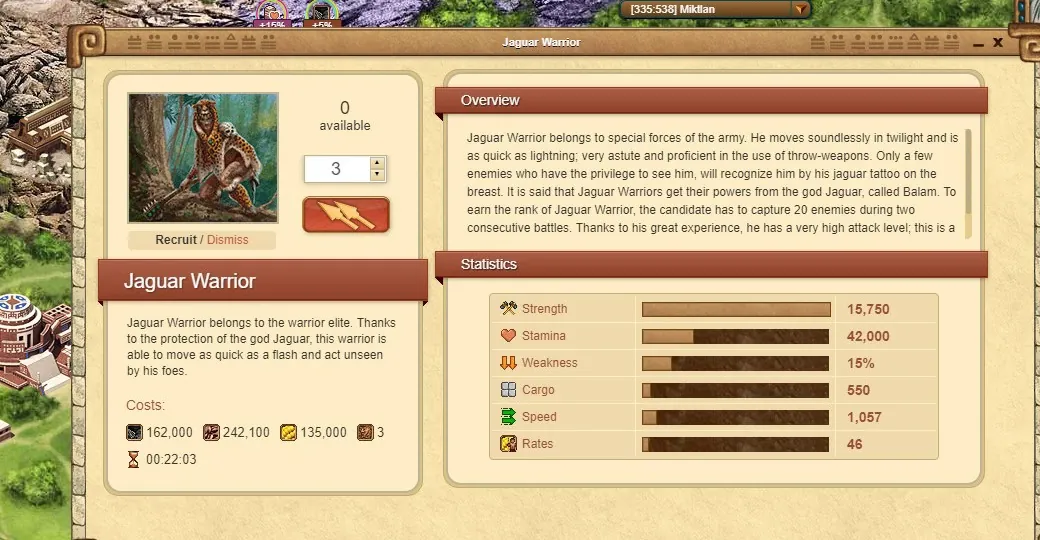
| Jaguar Warrior | Combat | Elite; needs Quetzal Palace level 1 in the city |
| Eagle Warrior | Combat | Elite warrior unit |
| Atlant | Combat | Elite; needs Quetzal Palace level 2 |
| Ek Chuah | Combat | Heavy elite; needs Quetzal Palace level 3; very slow |
| Spy | Support | Espionage; the only unit with no cargo |
| Shaman | Support | Heals losses during the battle |
| Quipucamayoc | Support | Raises the whole troop's strength (accuracy) |
| Polom | Support | Carrier, 2,000 resources |
| Pochteca | Support | Carrier, 10,000 resources; slow |
| Settler | Support | Founds a new city |
| Amazon Warrior | Support | Attacks enemy support units directly |
| Nahual | Special | One use spy that reveals troop movements |
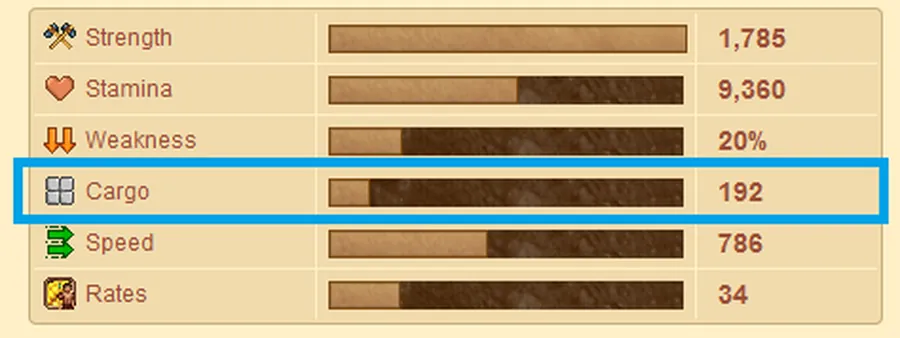
Every unit card lists six stats: Strength, Stamina, Weakness, Cargo, Speed and Rates. Stamina is how much damage a unit absorbs; Weakness decides the order in which units get hit.
How a battle is calculated
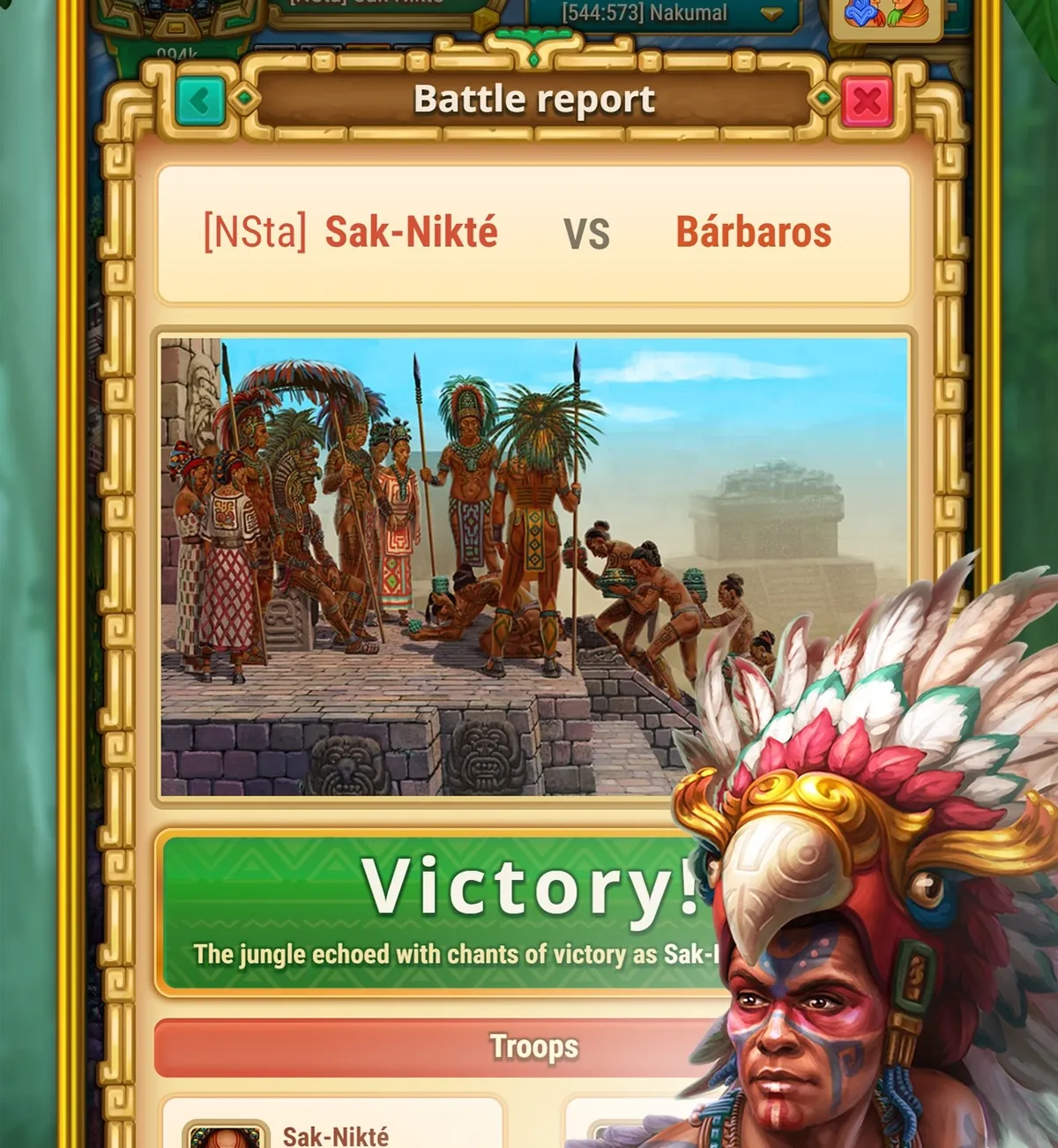
The official battle system guide splits every fight into three parts:
- Preparation. Bonuses from buildings, research, season, rituals, blessings, quests and the Tzolkin wheel are applied. The no corn stamina penalty is applied too. Four factors are fixed for the whole battle: luck, regeneration, accuracy and strength excess.
- Rounds. In each round both sides deal damage once. If the defender has a Wall, the attacker must bring the current Wall level to zero first; if the attacker's strength falls short, the rest of that turn is lost. Then strength is subtracted from enemy combat units, starting with the one with the highest Weakness. Support units are only hit when all combat units are down. After both turns, shamans revive part of the round's losses. After 5 rounds without a winner it is a draw.
- Aftermath. 8 to 15 percent (random) of each side's losses come home as damaged units for the Itzamna Temple. A beaten Wall drops one level. If the attacker won, it plunders limestone, obsidian and cacao.
The attacker always strikes first, but the defender always gets to answer, since losses only take effect in the next round.
Shamans, quipus and the strength excess factor
This is the part most guides skip, and it is where battles are won.
- Regeneration (shamans). Each shaman per combat unit gives 3 percent, up to 30 percent at 10 shamans per unit. That share of each round's losses comes back to life for the next round. Formula: shamans divided by units that are not shamans or quipus, times 3.
- Accuracy (quipucamayocs). Same formula and same 30 percent cap, but it raises your troop's effective strength.
- Luck. A random value between 0 and your total luck bonus (Stele, Moon Temple, season), capped at 10 percent. Your luck reduces the strength of the enemy hitting you.
- Strength excess. If your total strength is higher than the enemy's total stamina, you win in one round and get a bonus that cuts the damage you take, up to 99 percent. Overwhelming force is not wasted; it is how you take near zero losses.
Since support units are only hit after all combat units fall, a stack of shamans and quipus behind a solid front line is safe. That is why the FAQ's level 5 barbarian example is 245 jaguar warriors plus 2,450 quipus and 2,450 shamans: exactly 10 of each per combat unit, both bonuses maxed.
Bonuses that make every unit stronger
- Temazcal: stamina bonus (worth up to level 15).
- Dwarf Pyramid: strength bonus (up to level 15).
- Stele: luck bonus, 1 percent per level in the official example (up to level 10).
- Fire Feast: double strength for all troops from that city, attacking or defending, for a random 10 to 60 minutes, once every two weeks.
- Lightning Feast: double speed for the city's troops, same timing rules.
- Nature research: 1 percent unit speed per level. A mixed troop always moves at the speed of its slowest unit.
- Diplomacy research: players on the official forum point to it as the way to make units cheaper, which matters most for elite units.
Only one feast can be active per city. Starting a second one ends the first. Kauil items from the shop extend an active feast up to three times.
Espionage, the Watchtower and nahuals
Spy before every attack. Success depends on the difference in Espionage research, the number of spies sent and how many troops sit in the target city. Too few spies give an empty report; too many get noticed and caught. The target always gets a notification. If your spies are caught, a battle follows, and since February 2018 failed spies cannot hit back.
The same research hides your attacks: if your Espionage is at least 3 levels above the defender's Watchtower, they see an incoming attack but not your troops. Defenders, therefore, keep the Watchtower within 2 levels of the strongest neighbour's Espionage.
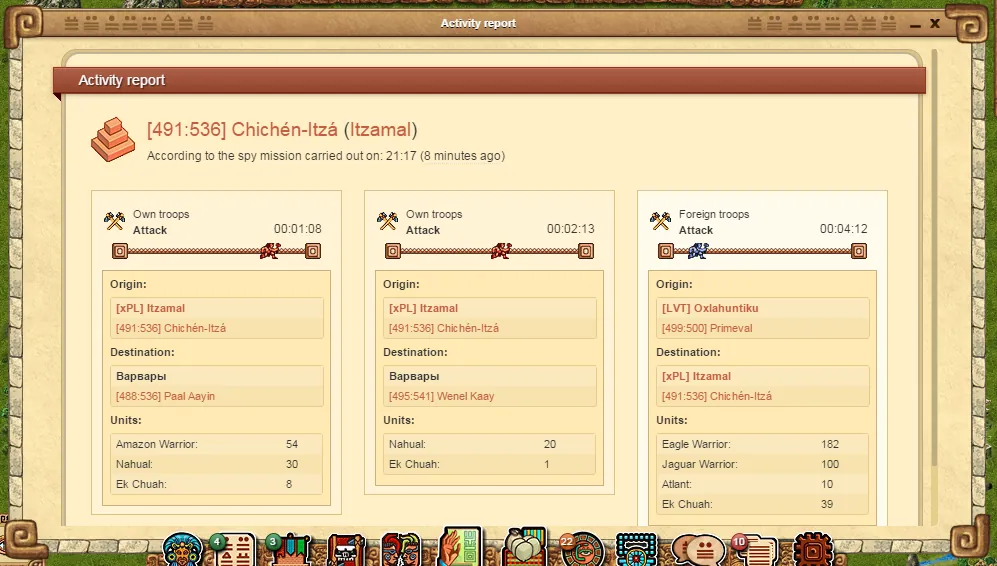
Nahuals are one use units that report incoming and outgoing troop movements of a city. Troops carrying nahuals stay hidden unless you send more nahuals than they carry.
Raiding: loot, cargo and barbarian troop examples
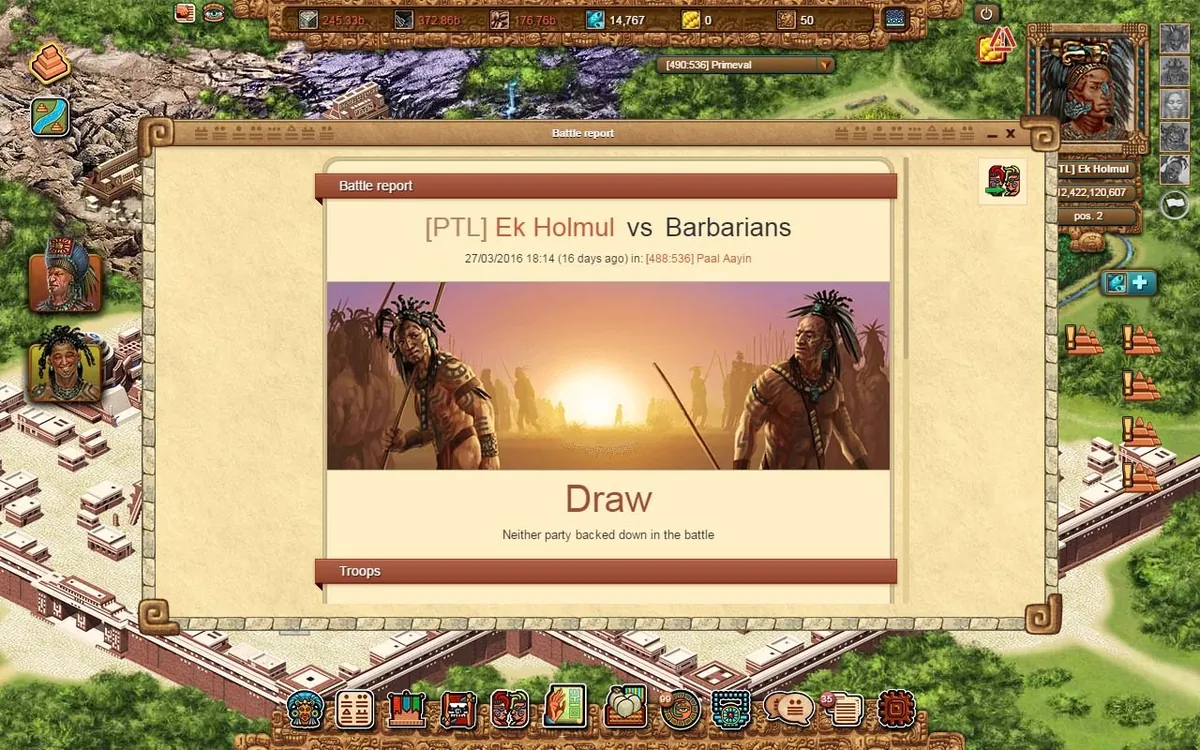
A winning attacker takes up to 40 percent of the defender's limestone, obsidian and cacao, plus 2 percent per Astrology level, minus what the Underground Cave hides, and never more than the troop can carry. The share is split as evenly as possible between the three resources. Bring enough cargo: poloms and pochtecas carry far more than warriors.
| Barbarian level | Official FAQ example troop |
|---|---|
| 1 | 5 lancers |
| 2 | 37 bowmen |
| 3 | 170 bowmen |
| 4 | 850 atlatl hunters |
| 5 | 5,000 atlatl hunters, or 245 jaguar warriors + 2,450 quipus + 2,450 shamans |
| 6 | 15 ek chuahs + 1,500 quipus + 1,500 shamans |
These examples assume an average set of bonuses. Spy the camp and run the simulator from the espionage report before you send anything; your Temazcal, Dwarf Pyramid and luck change the result.
Defending your city
Defense starts with the Wall. Its current level has to be broken before attackers can touch your units, and its stamina grows with every level (152,753 at level 20 in the official example). A Wall that loses drops one level, but never below level 1, and it keeps its stamina even when your city has run out of corn. Behind it, the same rules as in attack apply: your units are hit in order of Weakness, your shamans revive losses between rounds, and your Temazcal, Dwarf Pyramid and luck bonuses count for defenders too.
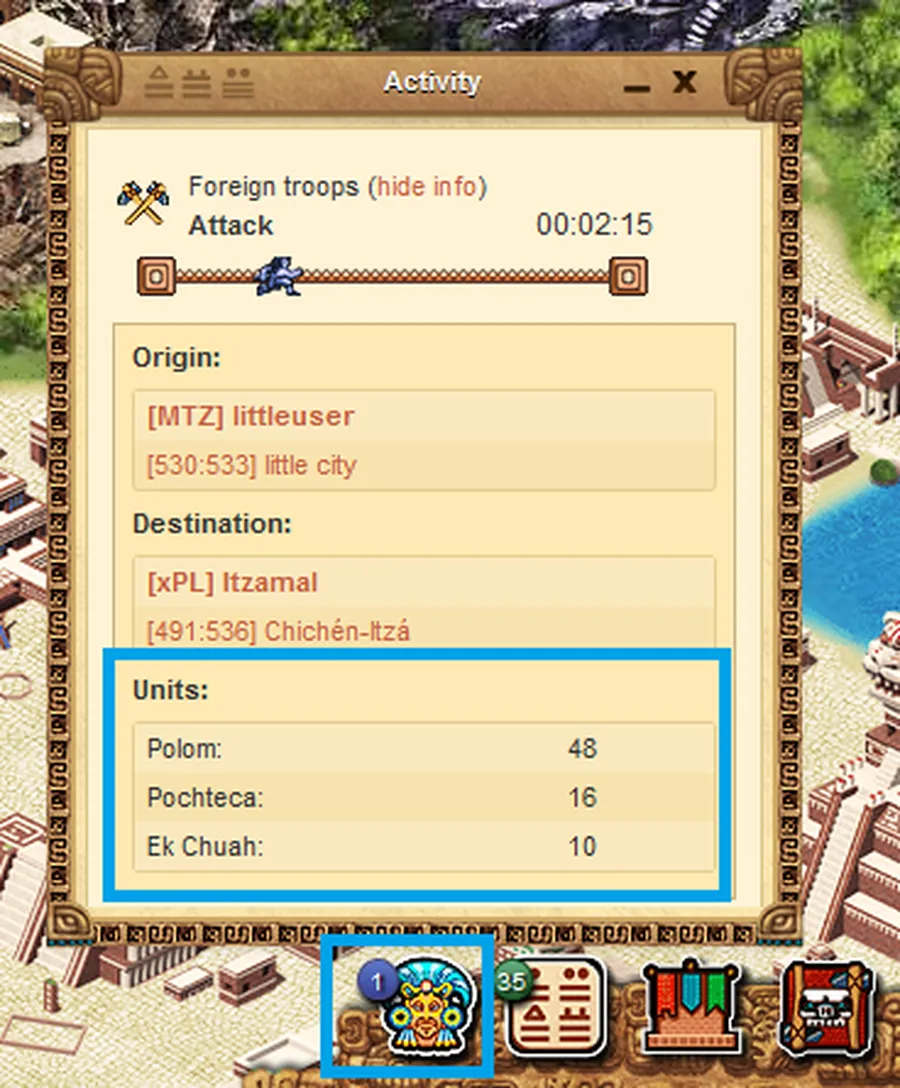
Tribe mates can station troops in your Tambo, and they defend automatically. The official FAQ also lists simple habits: do not leave piles of resources in the city when you go offline, because a city with nothing to take is rarely attacked, and react to the red Activity icon instead of waiting for the battle report.
Keeping your army alive
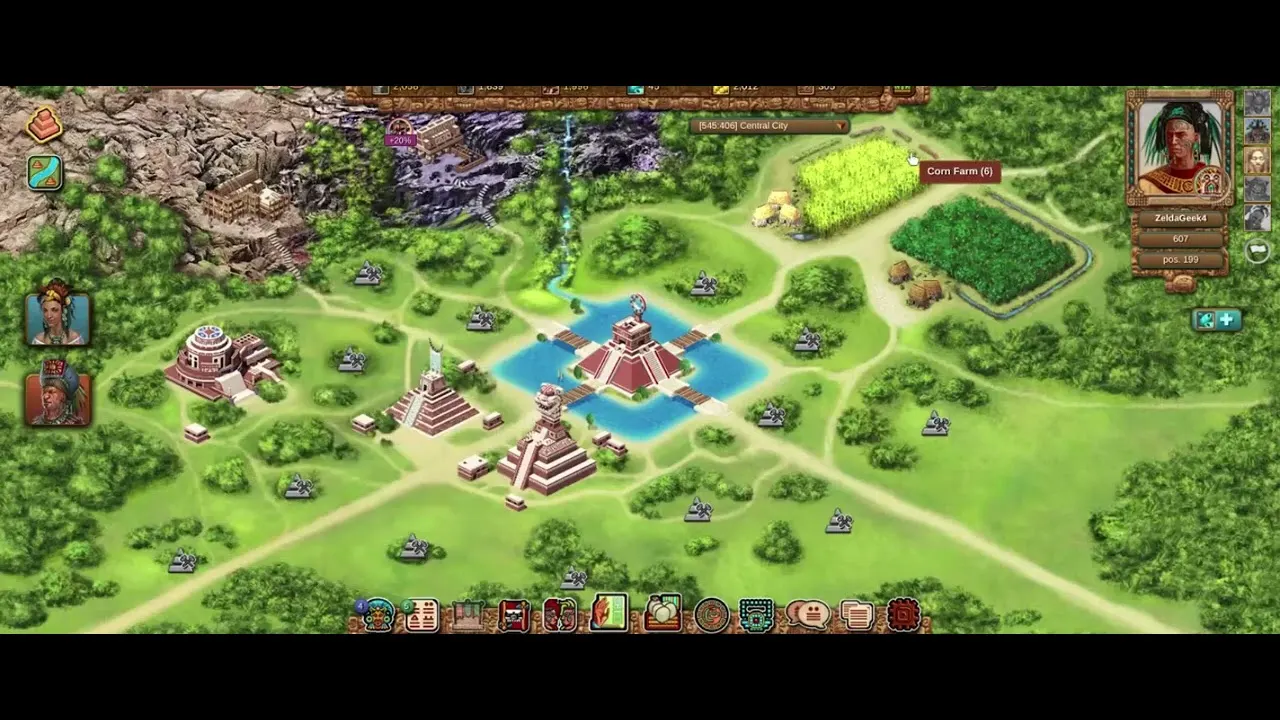 Tentlan #3: Building the Army (ZeldaGeek4)
- Build the Itzamna Temple early. Without it the 8 to 15 percent healable share of every loss is gone. Healing costs cacao and time.
- Never let corn hit zero. Units slowly lose stamina, and a city with zero stamina troops loses every fight.
- Dodge what you cannot beat. The FAQ's saving tactic: send your army and resources on a spy mission (with at least one spy) to an inactive player or a level 1 to 2 barbarian, timed to return when you are back. Use a slow unit like a pochteca or Ek Chuah to stretch the trip. If nahuals are in the troop, use attack instead, or you lose one nahual.
- Premium options exist. Ahaw survival items raise the share of losses that come home for healing to between 30 and 100 percent, Pakal items give full protection for 12 hours to 3 days, and the white flag pacific mode protects troops but not resources.
Fighting alongside your tribe changes all of this; read the alliances and quests guide for joint attacks through the Tambo, and the economy guide for the buildings behind a strong army.
FAQ
What are the best units in Tentlan?
There is no single best unit. Elite units such as Jaguar Warriors, Atlants and Ek Chuahs need Quetzal Palace levels 1, 2 and 3. They do best with 10 shamans and 10 quipucamayocs per combat unit, which maxes both the regeneration and accuracy bonuses at 30 percent.
What do shamans do in Tentlan?
Shamans heal losses during the battle. Each shaman per combat unit adds 3 percent regeneration, up to 30 percent, and that share of each round's losses returns for the next round.
How many rounds does a Tentlan battle have?
At most five. If neither side is wiped out after five rounds, the battle is a draw.
How much can I loot in Tentlan?
40 percent of the target's limestone, obsidian and cacao, plus 2 percent per Astrology level, minus what the Underground Cave protects, limited by your troop's cargo.
How do I see the troops in an incoming attack?
Your Watchtower must be no more than 2 levels below the attacker's Espionage research. If it is lower, you see the attack but not the units.
Do my troops die permanently in Tentlan?
Most losses do. Between 8 and 15 percent of losses come home as damaged units that the Itzamna Temple can heal for cacao, but only if you have built that temple.